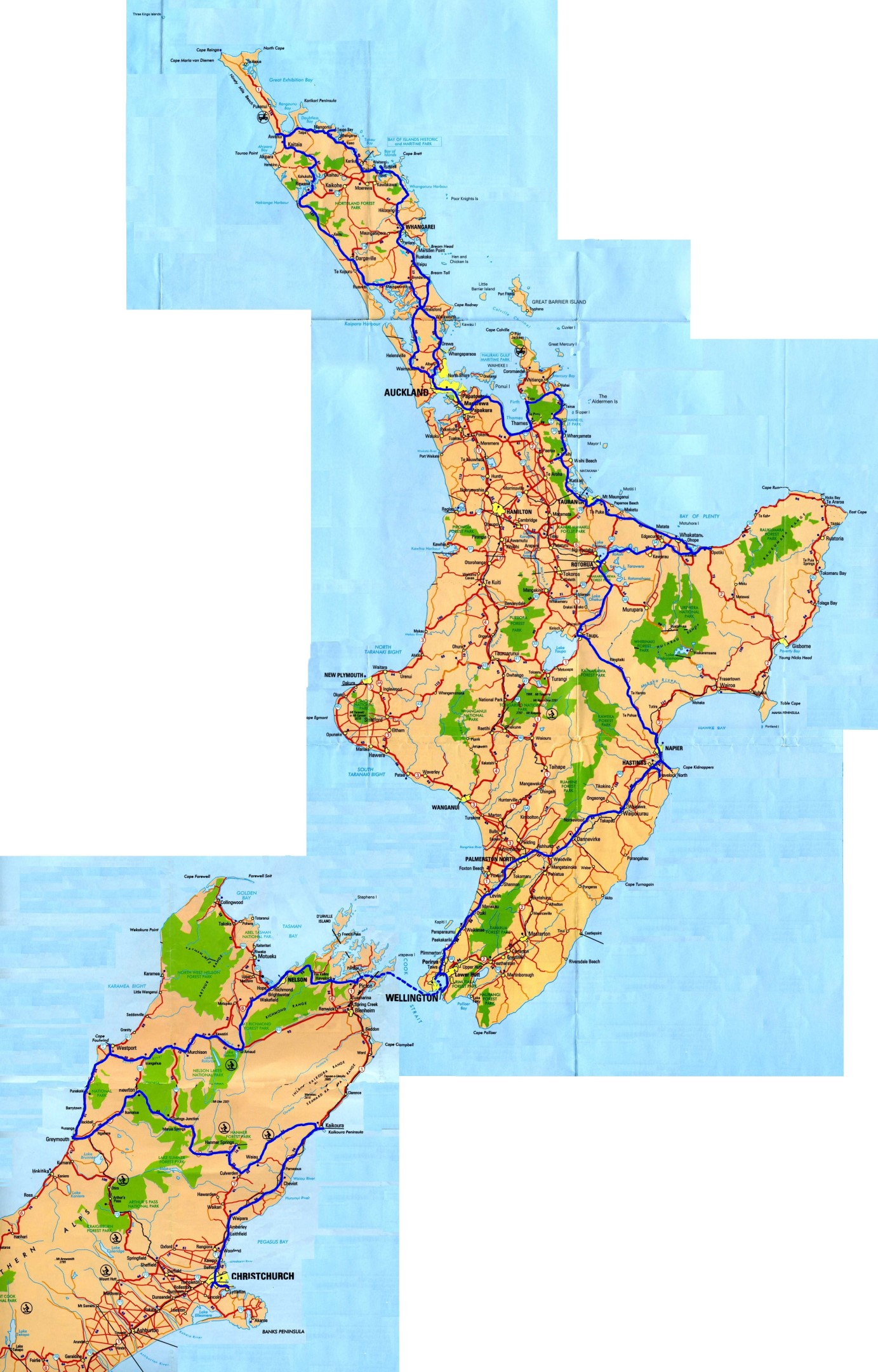
New Zealand South Island and Fiji 1995
Thursday 13th April 120km
We awoke to find heavy mist hanging, which was slow to clear, so it felt quite chilly. When it did, it was a sunny day which got quite hot in the afternoon. We drove into Picton to shop – we found the 4 Square shop even less inspiring than most. Adrian went to the bank for more money. We phoned Kaikoura and booked a "whale watch" for Tuesday. We looked at two old ships – the Echo built in 1905, and the Edwin Fox, in a great state of disrepair, was in use last century as a whaling ship and to take convicts to Australia.
We awoke to find heavy mist hanging, which was slow to clear, so it felt quite chilly. When it did, it was a sunny day which got quite hot in the afternoon. We drove into Picton to shop – we found the 4 Square shop even less inspiring than most. Adrian went to the bank for more money. We phoned Kaikoura and booked a "whale watch" for Tuesday. We looked at two old ships – the Echo built in 1905, and the Edwin Fox, in a great state of disrepair, was in use last century as a whaling ship and to take convicts to Australia.






As the mist lifted, we could see what an attractive place Picton is. We drove out towards Nelson, stopping every little while to marvel at the scenery and to take photographs. This whole area is one of inlets and forest covered peninsulas. Quite one of the most attractive areas we have ever seen.
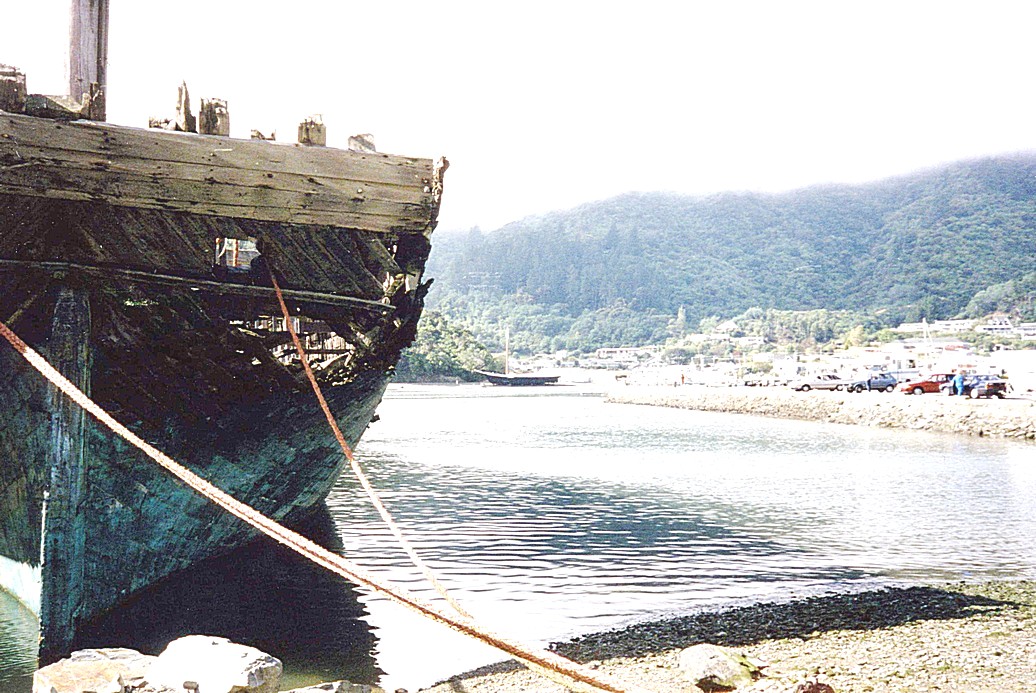
The Edwin Fox in Picton Harbour
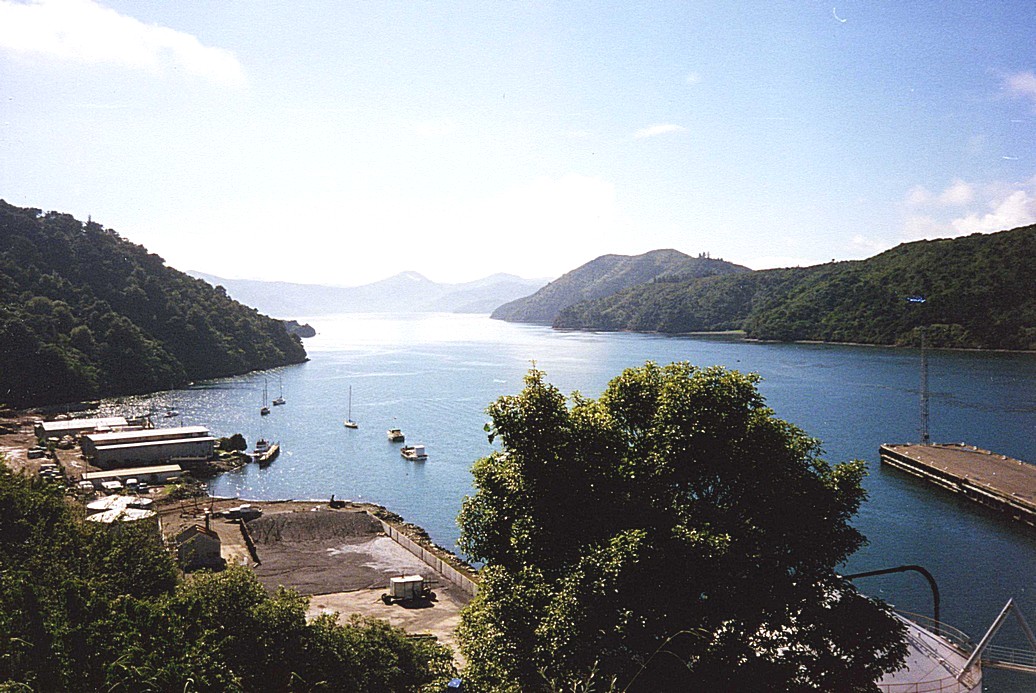
Picton Harbour
At Ngatutu we stopped and walked a little way round the bay. Small greenish birds were carolling in the trees above. It was quiet apart this and quite exquisite – a memory we will treasure. We decided to stop here for lunch – a lovely fresh loaf we bought at Picton bakery, eaten with other goodies. I had bought some creamed (set) honey.
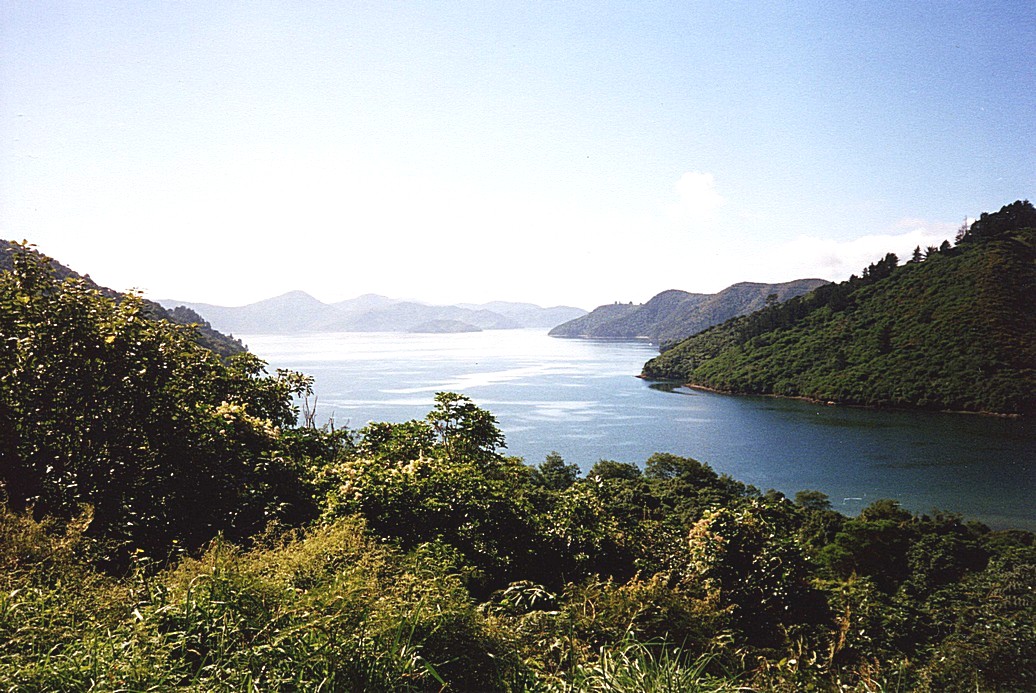
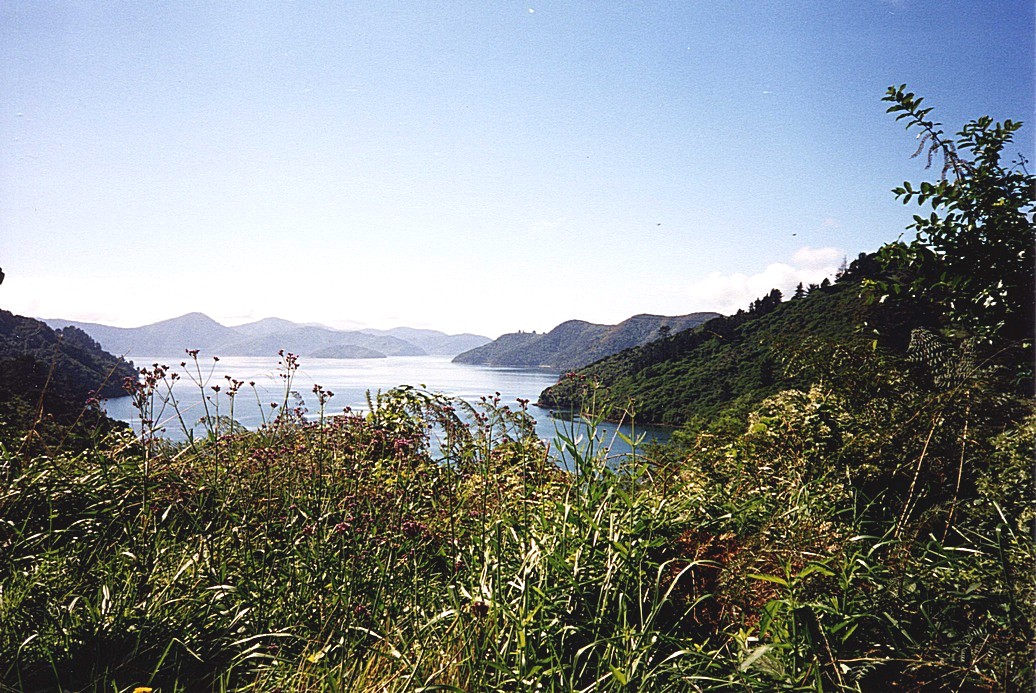
Views along the coast from Picton
A bit further on again we stopped at Mahakipawa Bay, a beautiful natural spot, but a plaque in a rock said that for many years this was a busy port, transporting timber. The only evidence now was a couple of barely visible struts from the sea, and heaps of stones which had been emptied into the sea, having been used as ballast.
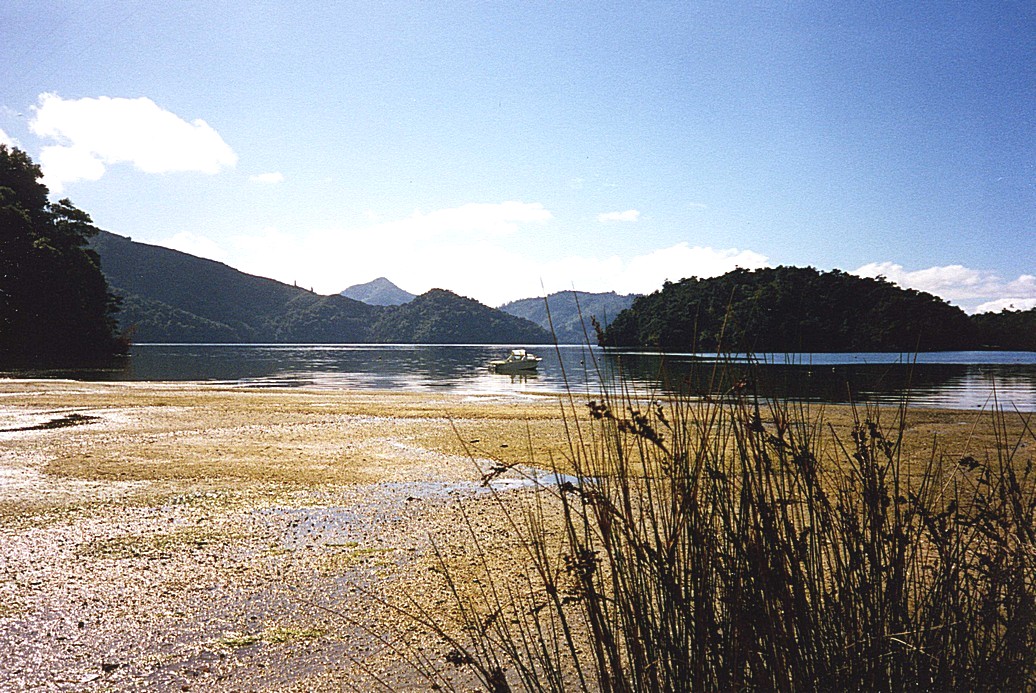
Ngatutu
Just before Havelock we came to a viewpoint at Cullens Point, where views in 360° were quite spectacular – a wide valley between wooded hills on one side and sea and hills in all other directions. There was a circular one hour walk here around the point, which we decided to go on. It was 3.00 pm when we left and the sun was very warm. I decided not to wear my shorts, as I thought the pathway might be prickly. However it had been recently "mown", so it wasn't a problem, and was fairly wide – only once or twice did it get a bit narrow, so that I nearly had the collywobbles, as it was quite high above the sea and steep. We had followed a cable for the first half of the walk, and wondered what it was for. We decided it was the telephone to a remote house across the water – approachable only by sea. The first half of the walk was in sun, then we went into shade and the vegetation immediately changed to rainforest. There were some trees with black trunks – we thought at first that they were burnt, but realised that it was a type of fungus growing on them. It was very attractive to wasps or bees – we didn't stay to find out which!
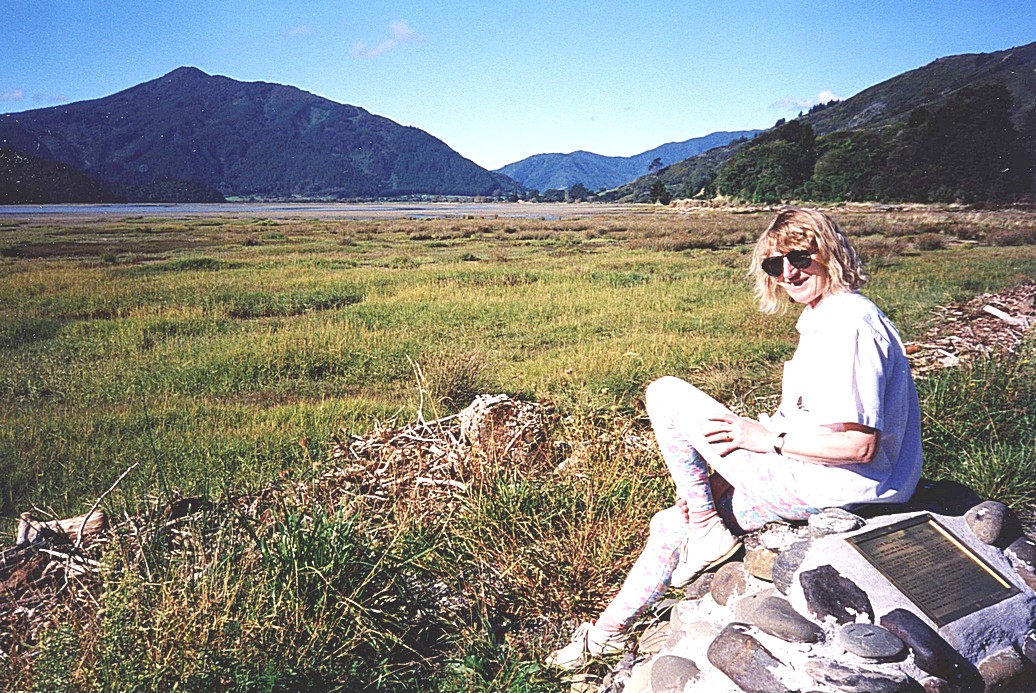
Rosie at Mahakipawa Bay
We continued on our way, stopping to look at a site at Pelorus Bridge, but it was empty and remote, in the middle of forest, and we decided to press on to Nelson. We didn't realise that this would mean scaling two mountain passes, on continually winding roads through densely wooded slopes.
On arrival at Nelson we located the site – we should have been more wary of "adjacent to beach", as this definitely means "not on the beach". The huge beautiful sandy beach is in fact "adjacent". We got to it by walking through the road past the pleasure complex. The sun had just disappeared. There was a wonderful beauty here on this fine sandy beach with distant headlands in pinks and mauves. It was a little like Denmark. The temperature was too, as it had dropped dramatically with the setting of the sun.
On arrival at Nelson we located the site – we should have been more wary of "adjacent to beach", as this definitely means "not on the beach". The huge beautiful sandy beach is in fact "adjacent". We got to it by walking through the road past the pleasure complex. The sun had just disappeared. There was a wonderful beauty here on this fine sandy beach with distant headlands in pinks and mauves. It was a little like Denmark. The temperature was too, as it had dropped dramatically with the setting of the sun.
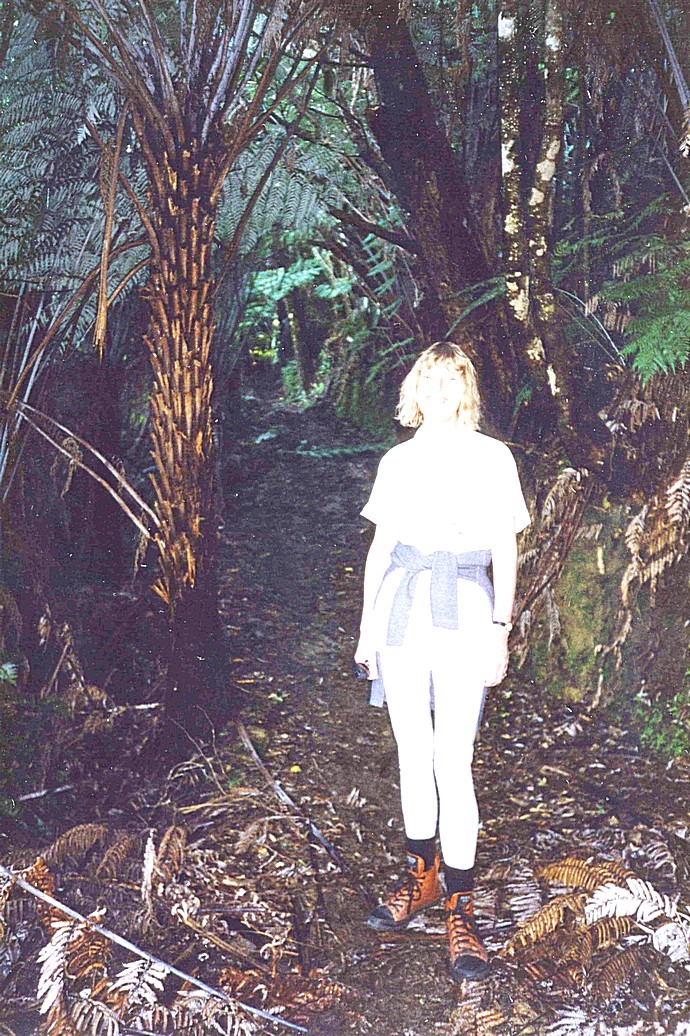
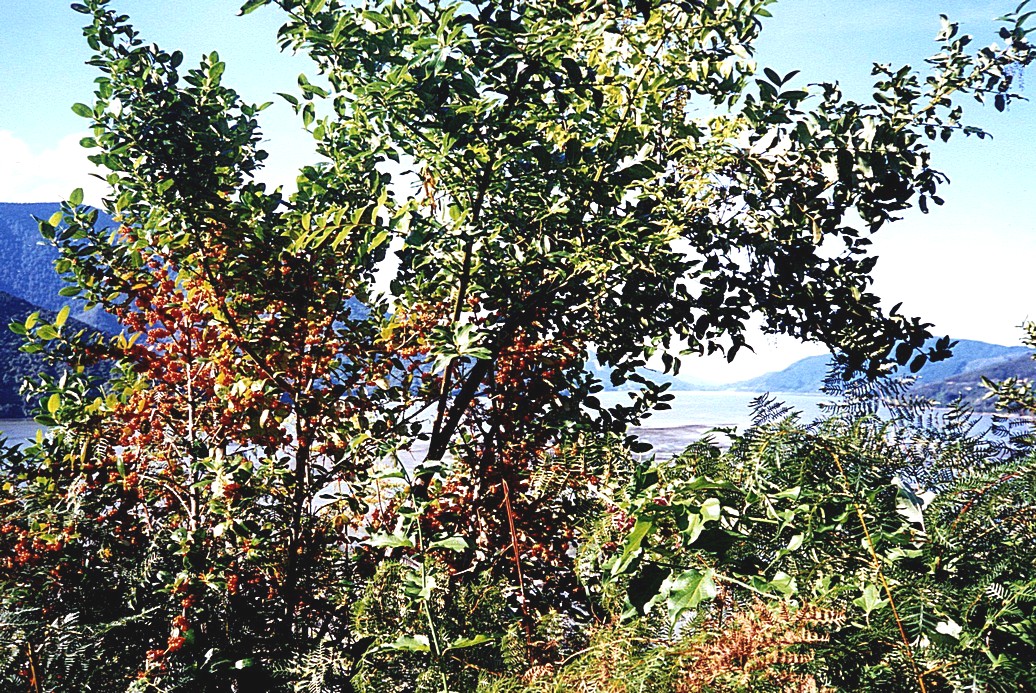
Cullens Point - sunny side and rainforest side
We managed to find our way back to the site just before it got dark. It is a huge site, almost empty now, but apparently the largest in Australasia! – nearly 1000 pitches! Also it is very near the airport – as we heard!
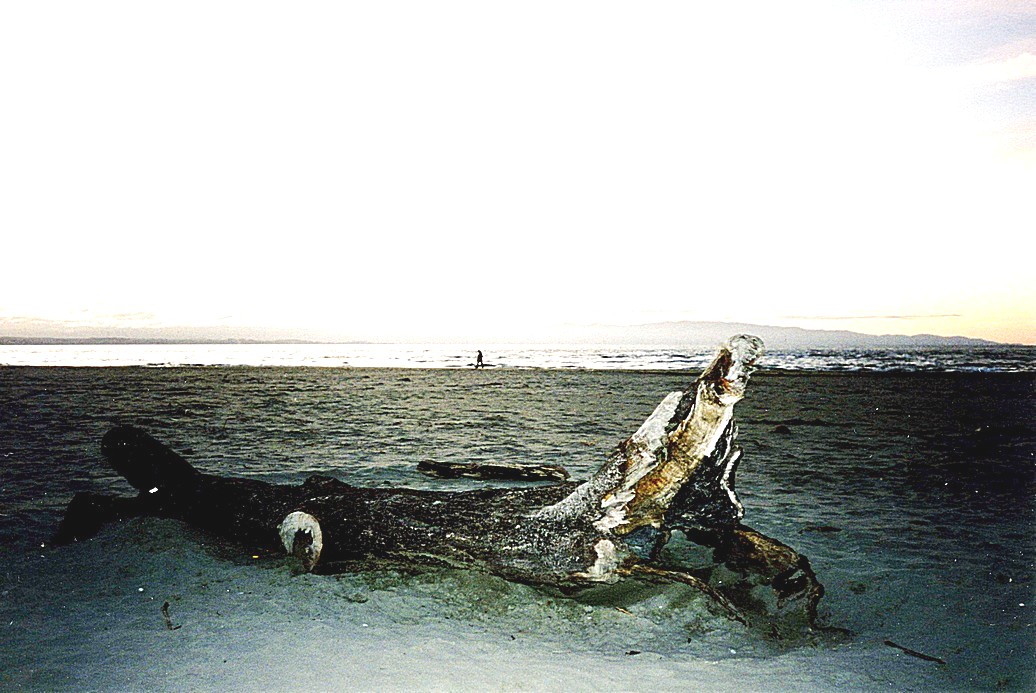
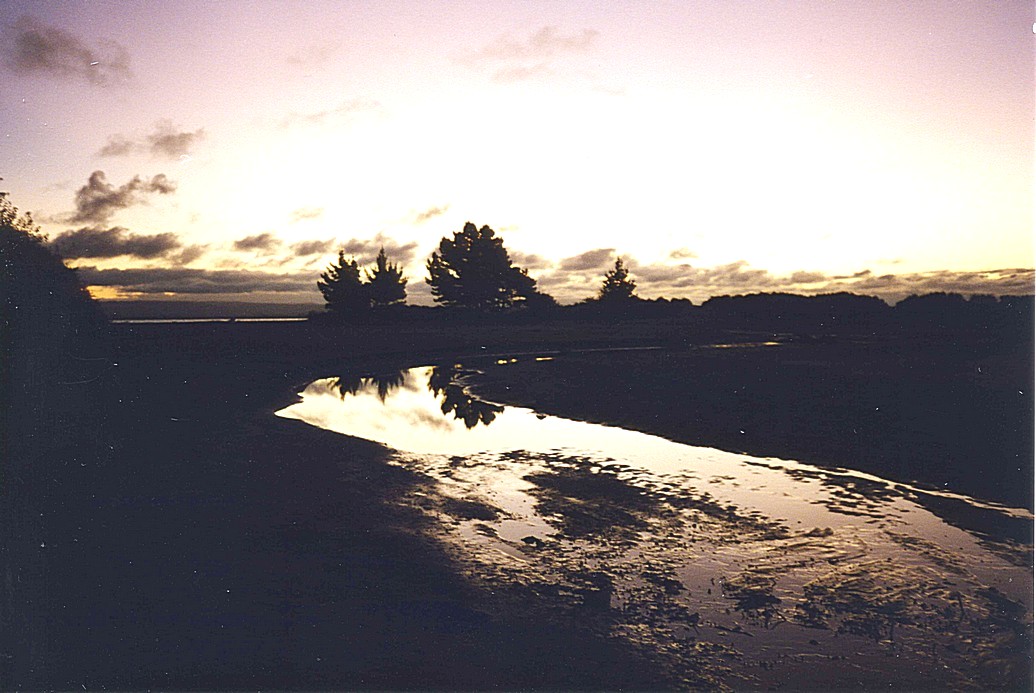
The beach and sunset at Nelson
Friday 14th April 169km
A cloudy start, but alternating with sun during the day. There was a phone box just near where we were parked and I started the day by trying to phone Thomas. Many tries later I made it – after buying a new phone card (ours hadn't enough left on it), and several tries when it was engaged, I finally got through to him and had a short chat for my five dollars and found that he had a good time in Wales.
We were also near the kitchen block, so had the luxury of toast for breakfast, using the rest of our nice white loaf. We called briefly at the well stocked Supermarket – being Good Friday most shops were shut. We then drove down to a pleasant bit of beach adjacent to the other side of the campsite – called Parkers Beach. The tide was in now and it was very pleasant (and warm!) and with character.
A cloudy start, but alternating with sun during the day. There was a phone box just near where we were parked and I started the day by trying to phone Thomas. Many tries later I made it – after buying a new phone card (ours hadn't enough left on it), and several tries when it was engaged, I finally got through to him and had a short chat for my five dollars and found that he had a good time in Wales.
We were also near the kitchen block, so had the luxury of toast for breakfast, using the rest of our nice white loaf. We called briefly at the well stocked Supermarket – being Good Friday most shops were shut. We then drove down to a pleasant bit of beach adjacent to the other side of the campsite – called Parkers Beach. The tide was in now and it was very pleasant (and warm!) and with character.
We made our way back into Nelson passing a house I had seen yesterday with the most magnificent "rose pink" rose all along the front. Roses seem to flower well here. Nelson was very quiet with no shops open. There were lots of attractive well kept up houses. We parked at the foot of the steps leading up to the strange looking cathedral. The main part of the cathedral was built in 1925, but the tower was built in the 60's and looked more like a construction tower. However, the situation was idyllic and there were attractive gardens surrounding the church. We walked through these and into the entrance of the church, which was separated from the main part by glass screens. A service was in progress – it was nice to feel part of the Easter celebrations.
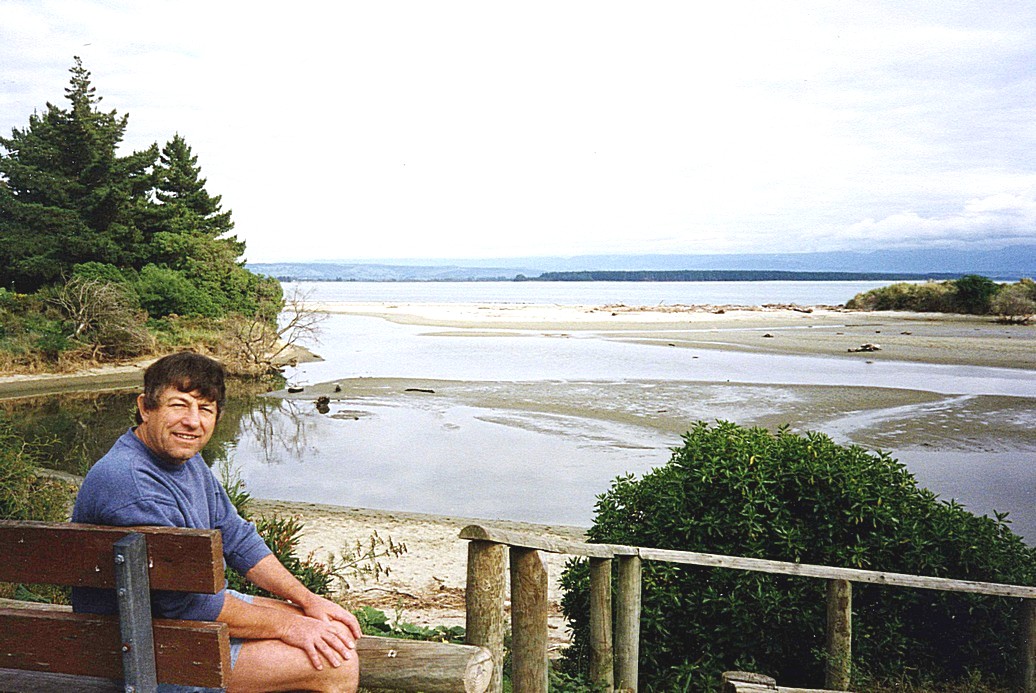
Adrian at Parkers beach, Nelson
We now got on our way south from Nelson, driving through Stoke first – an extension of Nelson. Here we turned off to see Isel house – a stone house built in 1848. This was set in parkland of glorious trees, which we drove around following signs to the car park. We felt rather intruders here – particularly as we hadn't expected it to be open today. The house was opposite Nelson Museum. We viewed both from the outside, then left.
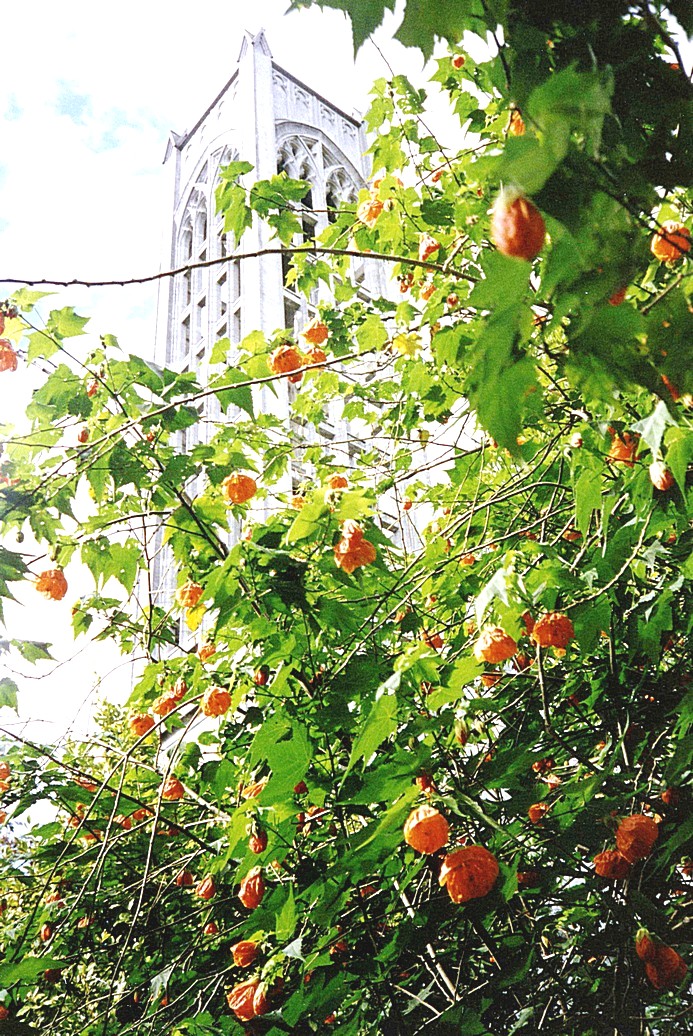
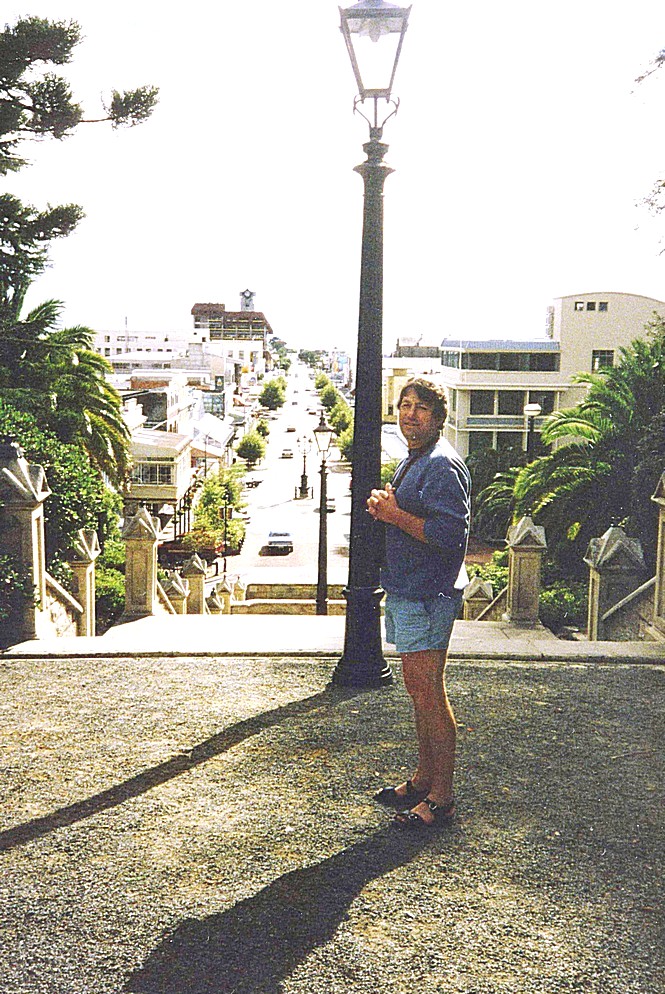
We sat briefly on a seat above the steps, enjoying the warm sunshine – Nelson is said to have the sunshine record for New Zealand – then drove off and parked by a little river on the other side of Nelson, opposite the swimming pool, built in 1925 – we sat on a seat here and enjoyed hot cross buns bought yesterday at Picton. All hot cross buns here seem to be brown (as opposed to white), but these tasted very good.
Nelson Cathedral though a shrub
Looking down to Nelson
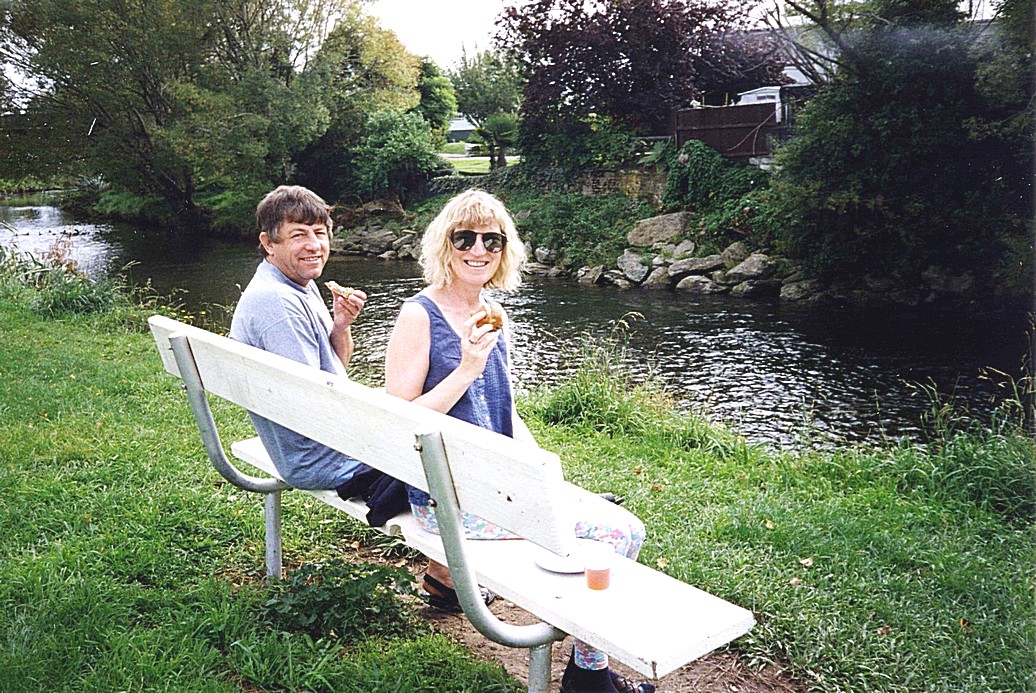
Eating hot-cross buns in Nelson
Adrian had stopped for petrol and the man asked if he was related to the racing driver of the same name! Is there something we don't know?
After Stoke we drove through Richmond, Hope, Brightwater, Wakefield. We passed a "historic site" and on stopping found that it was a memorial to Lord Rutherford – the first man to split the atom. It was almost like an open air museum, numerous panels telling of his life, from his birth at Brightwater – where the memorial was – to his adulthood and his discoveries. As his father was Rutherford and his mother Thompson. I like to think that there were family connections! There was certainly plenty of interest to read, including a quotation by J. D. Greenwood – the Inspector of Nelson primary schools – in 1861 (before Rutherford was born) – "I think it matters comparatively little how much a child knows, if he has not learnt how to learn more" – how true!
We were making slow progress today – but nicely so. We took the road to St. Arnaud and Lake Rotoiti – one of the two so called Nelson Lakes, although they are some distance from Nelson. We were driving through thickly forested slopes, but with few stopping places. We eventually stopped for lunch parked near to a small river, away from all the electricity pylons which spanned the countryside. By the time we arrived at Lake Rotoiti it was 3.30 and pretty chilly! The lake is 2000 feet above sea level and was formed by glaciation. We stopped at the visitor centre and purchased a book on the Brunner peninsular Walk for $0.50. We were glad of our fleece jackets, as there was an icy feel to the air. The walk was set as a nature trail and we found out quite a bit about the natural plants. We also discovered about the black fungus on tree trunks - it is caused by the scale insect, which eats the sap of the tree and secretes the surplus. Bees, wasps and birds feed on this and the fungus grows on it. On leaves it looks just like the fungus on the citrus plants at home, which had scale insects on them.
After Stoke we drove through Richmond, Hope, Brightwater, Wakefield. We passed a "historic site" and on stopping found that it was a memorial to Lord Rutherford – the first man to split the atom. It was almost like an open air museum, numerous panels telling of his life, from his birth at Brightwater – where the memorial was – to his adulthood and his discoveries. As his father was Rutherford and his mother Thompson. I like to think that there were family connections! There was certainly plenty of interest to read, including a quotation by J. D. Greenwood – the Inspector of Nelson primary schools – in 1861 (before Rutherford was born) – "I think it matters comparatively little how much a child knows, if he has not learnt how to learn more" – how true!
We were making slow progress today – but nicely so. We took the road to St. Arnaud and Lake Rotoiti – one of the two so called Nelson Lakes, although they are some distance from Nelson. We were driving through thickly forested slopes, but with few stopping places. We eventually stopped for lunch parked near to a small river, away from all the electricity pylons which spanned the countryside. By the time we arrived at Lake Rotoiti it was 3.30 and pretty chilly! The lake is 2000 feet above sea level and was formed by glaciation. We stopped at the visitor centre and purchased a book on the Brunner peninsular Walk for $0.50. We were glad of our fleece jackets, as there was an icy feel to the air. The walk was set as a nature trail and we found out quite a bit about the natural plants. We also discovered about the black fungus on tree trunks - it is caused by the scale insect, which eats the sap of the tree and secretes the surplus. Bees, wasps and birds feed on this and the fungus grows on it. On leaves it looks just like the fungus on the citrus plants at home, which had scale insects on them.
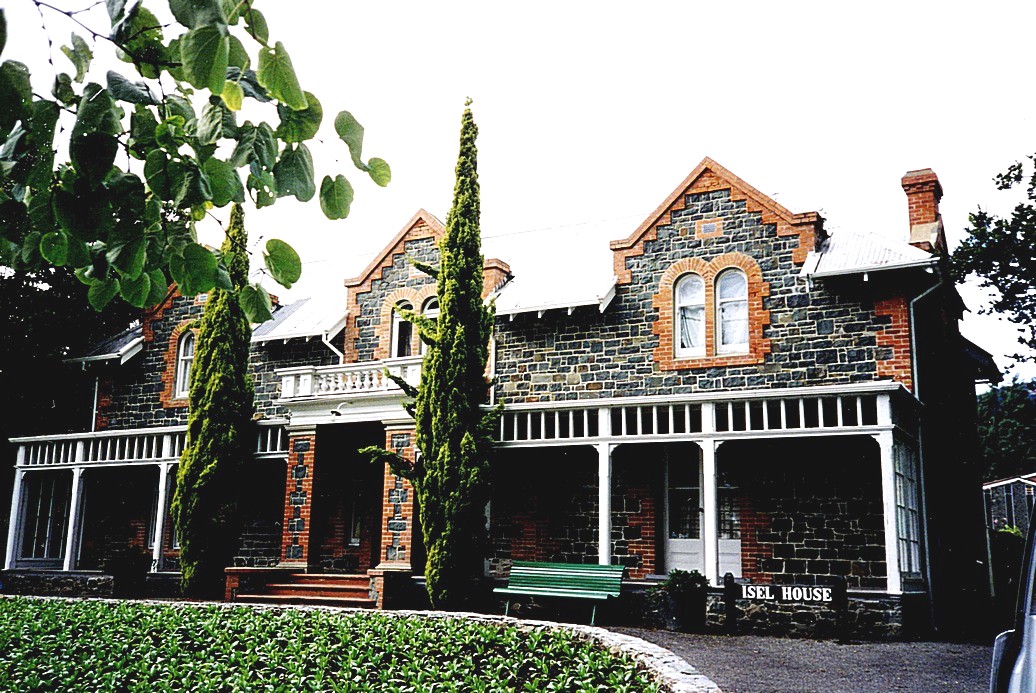
Isel House, Stoke
By the time we returned from this peaceful walk, it was 5.00 pm, and we had to decide what to do. It seemed a bit cold to stay here, but there were no campsites near. We decided to head on as we could always stop if necessary (actually we found out later we had very little water). This proved to be the right move, as the 30 mile drive through the Buller Valley was exquisitely beautiful, the low sun glorious on the many distant slopes. We crossed and re- crossed the Buller River, which we will follow right to the west coast. At Murchison we turned off to a "motor camp" and stopped at a delightful forestry commission type site (next to the graveyard). We were booked in by a very young "Sharon" and parked just as the sun was setting behind the hills. We walked down to the river, which surrounds the site. The colours of the setting sun reflected in the water were magical – pinks, blues, yellows. It was quiet and peaceful – another moment to be treasured.
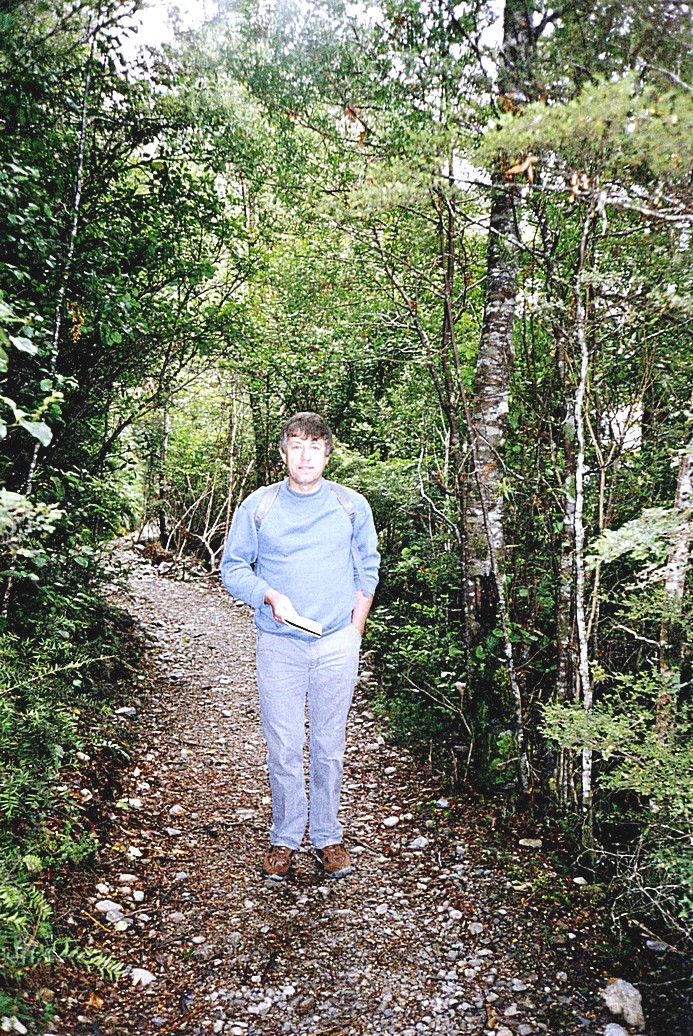


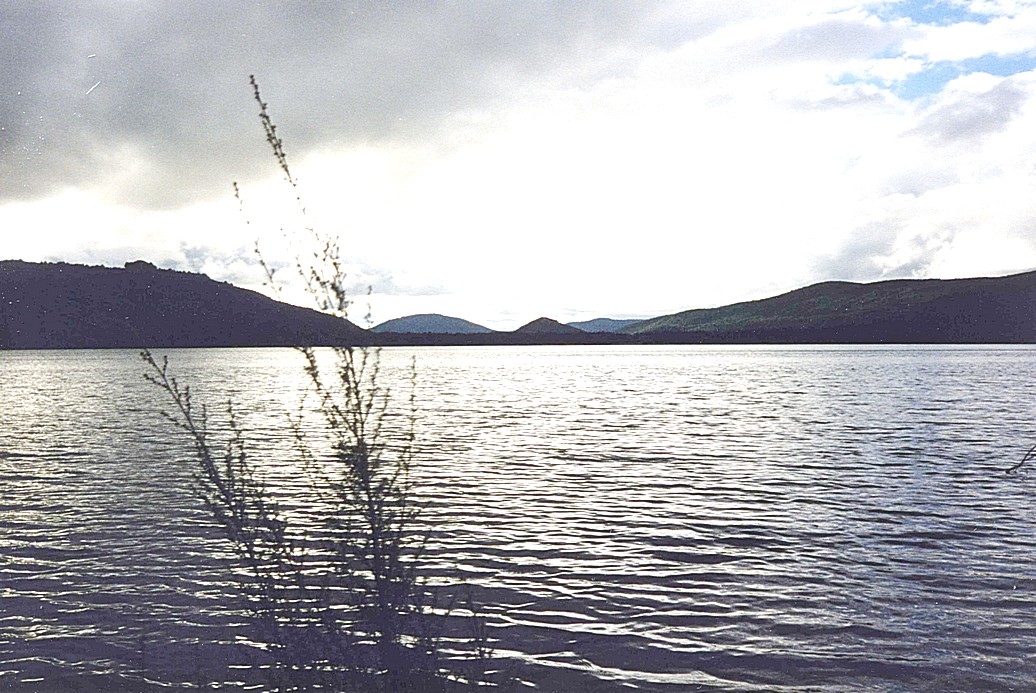
Around Lake Rotoiti
We came back to the van in its delightful forest setting. Any thoughts of doing the washing were quashed when we saw the archaic "mechanised washing dolly" in the "laundry"!
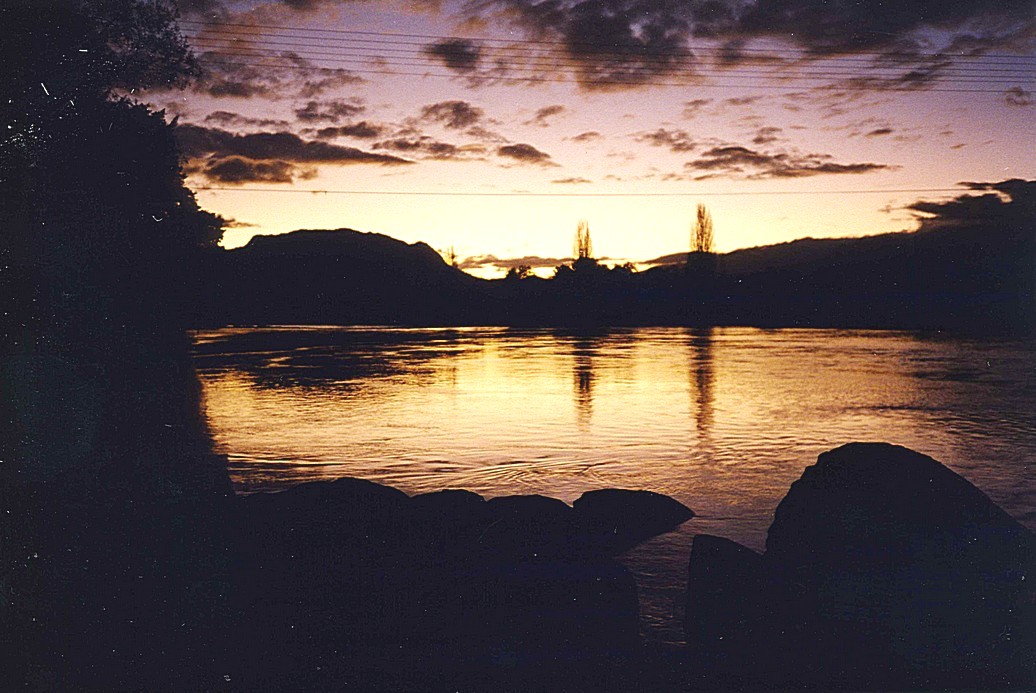
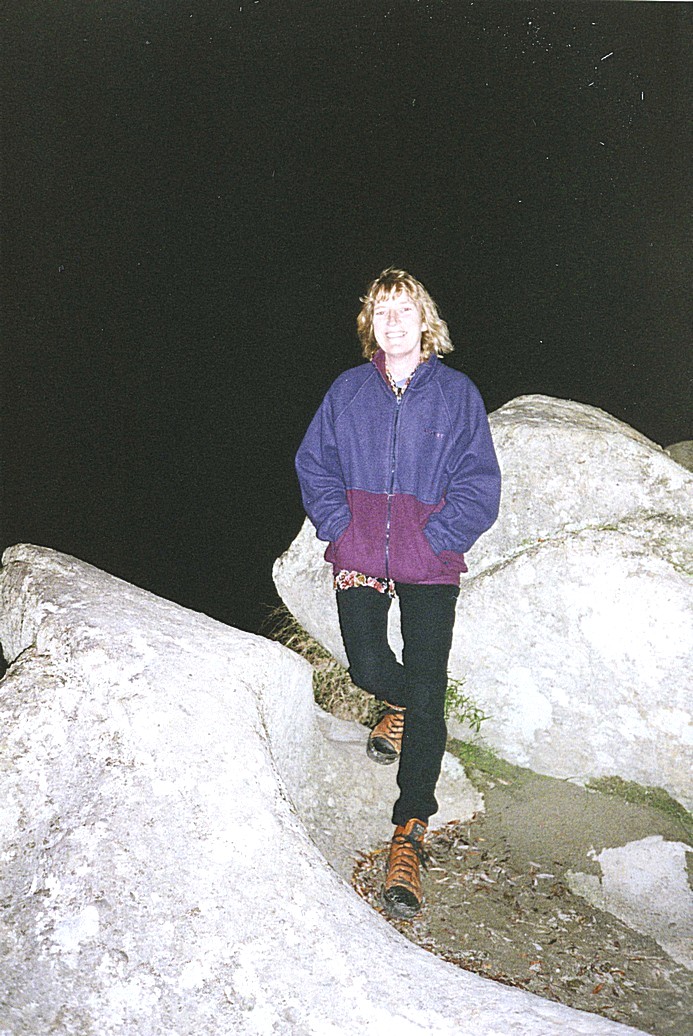
Rosie on our walk and sunset over the Murchison River
Saturday 15th April 187km
A buzzing of a wasp disturbed me several times in the night and notably at 5.00 am, when we found that it was outside, but trapped in the air vent above our heads. Adrian managed to bash it out. Consequently it was past 8 o'clock when we woke up again. The sun was trying to shine through over the hills.
We continued to follow the Buller River through two gorges. At Murchison we had looked for a shop, but the supermarket, like everything else, looked shut up for the weekend. Murchison had been destroyed by an earthquake in 1929. The attractive houses we saw must have been built since then.
There were several "pull off" places along the road – one to a waterfall – a very bumpy and unmade up road, with no indication of how long we had to drive. Another was for a swing bridge over the River, but that held no attraction for me. At Lyall there was a signpost to the cemetery – with two graves! We passed bushes laden with berries and also some very attractive flowers beside the road – from a distance looking like poppies, but with flowers nothing like them. I think they might be sparaxis.
A buzzing of a wasp disturbed me several times in the night and notably at 5.00 am, when we found that it was outside, but trapped in the air vent above our heads. Adrian managed to bash it out. Consequently it was past 8 o'clock when we woke up again. The sun was trying to shine through over the hills.
We continued to follow the Buller River through two gorges. At Murchison we had looked for a shop, but the supermarket, like everything else, looked shut up for the weekend. Murchison had been destroyed by an earthquake in 1929. The attractive houses we saw must have been built since then.
There were several "pull off" places along the road – one to a waterfall – a very bumpy and unmade up road, with no indication of how long we had to drive. Another was for a swing bridge over the River, but that held no attraction for me. At Lyall there was a signpost to the cemetery – with two graves! We passed bushes laden with berries and also some very attractive flowers beside the road – from a distance looking like poppies, but with flowers nothing like them. I think they might be sparaxis.
On the road today we saw one car, which had lost its bicycle – found lying in the road a bit squashed, and one trailer minus its wheels – two young boys with it, obviously waiting for the driver to return
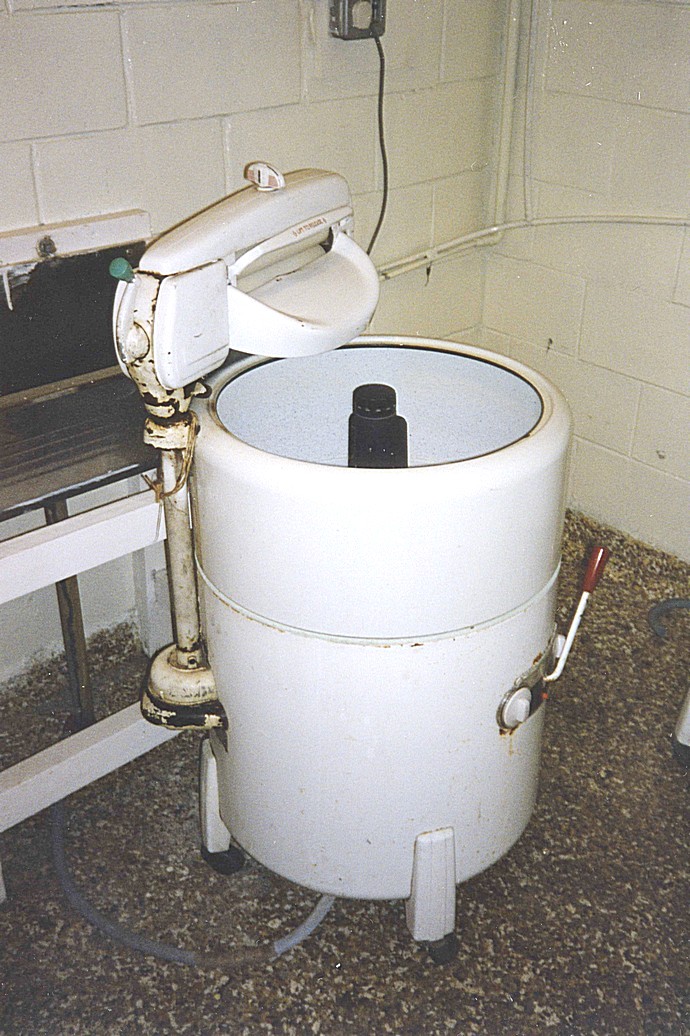
The latest washing machine
We got involved in a cycle race – going in the opposite direction, and with not many cyclists.
We drove into Westport, hoping to find a shop and after much searching we found a "New World", but it was even less inspired than the last place! This area is renowned for coal, but the only evidence we saw was in trucks of coal on a passing train.
We drove to an area nearby, on the coast and stopped for lunch parked right by the sea at Carters Bay. The beach was of fine sand, but tinged with black (more evidence of the coal!). The waves rushed in and there was a lot of driftwood – very attractive. We had a short walk on the beach after lunch and met an English couple also touring New Zealand, but having spent seven weeks in Australia with relatives and now touring by car.
We drove into Westport, hoping to find a shop and after much searching we found a "New World", but it was even less inspired than the last place! This area is renowned for coal, but the only evidence we saw was in trucks of coal on a passing train.
We drove to an area nearby, on the coast and stopped for lunch parked right by the sea at Carters Bay. The beach was of fine sand, but tinged with black (more evidence of the coal!). The waves rushed in and there was a lot of driftwood – very attractive. We had a short walk on the beach after lunch and met an English couple also touring New Zealand, but having spent seven weeks in Australia with relatives and now touring by car.

Sparaxis? near Lyall
We were adjacent to Cape Foulwind and thought we must visit a place with a name like that! We stopped at Tauranga Bay, a beautiful bay with fine sand.
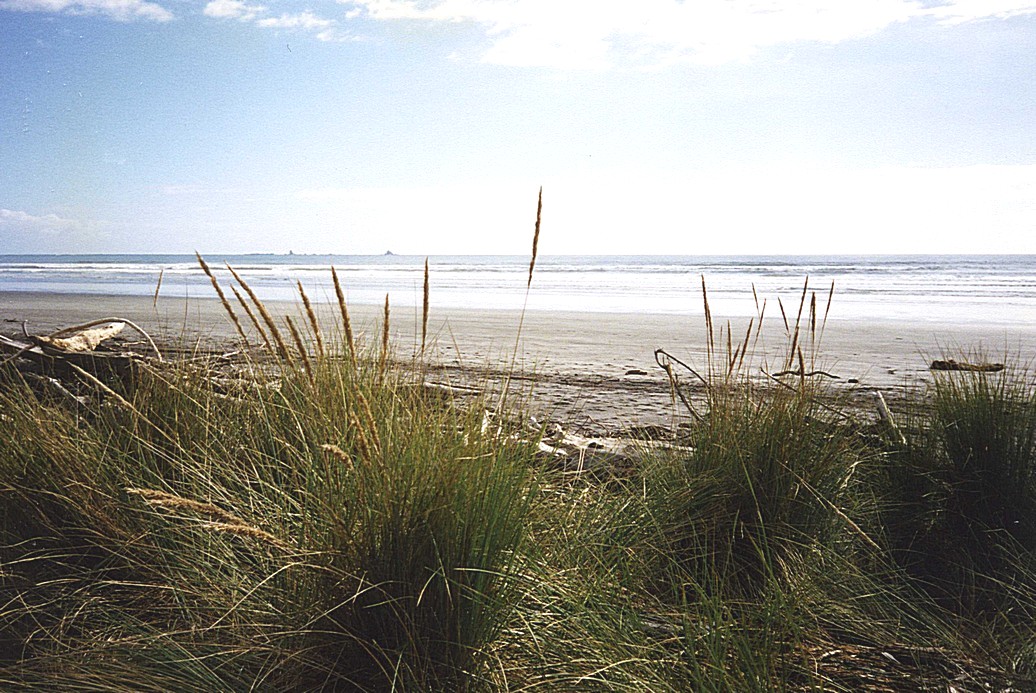
Carters Bay
Lots of cars were parked here, because a few minutes away there was a colony of fur seals. We set off to see them and to walk further along the coast. This was another highlight of our holiday. It had suddenly become beautifully warm (suntop and shorts weather) and our walk was delightful. We looked down first to see the seals – lots of them, some looking up as if to say "here I am, take my photo" (photo too bad to put in). We felt privileged to be there.

The beautiful Tauranga Bay
There was a signpost nearby, with amongst other places, London 16,286 km. The coast here is wonderful and we had a very happy walk, revelling in the warm sunshine. On our return we saw a small bird with a nuthatch type head, fat body and wagtail movement of the tail, yellowish grey and seemingly unafraid. We stopped by the Able Tasman astrolobe – a copy of the sextant he used in 1642 when he charted this coast. At this point we saw another bird – a large quail type bird, brown and again very unconcerned – a Kiwi without the beak.
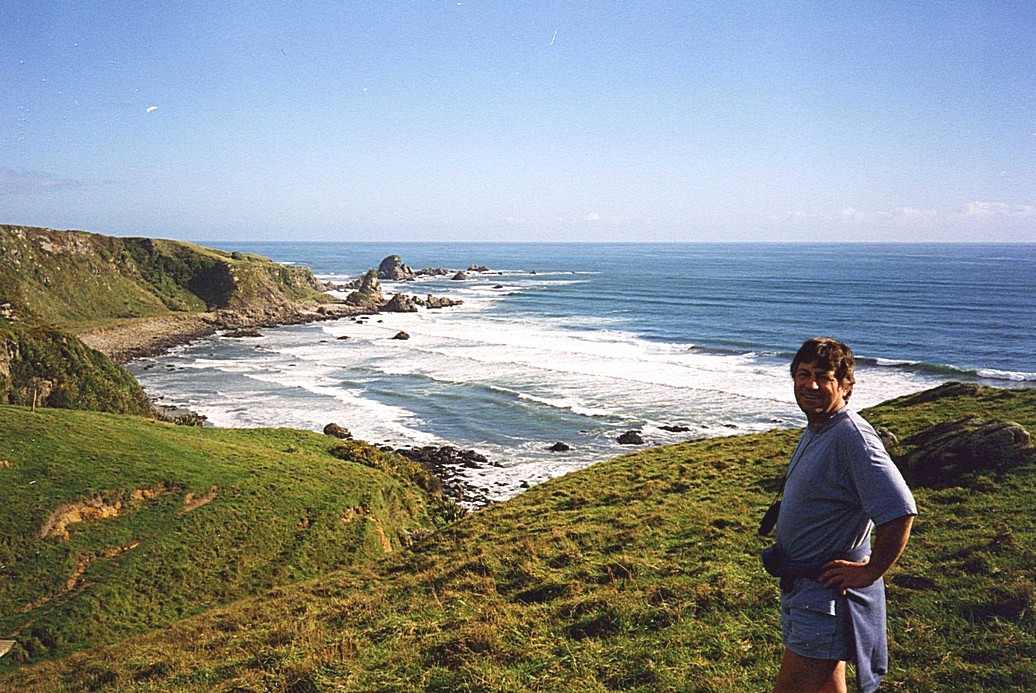
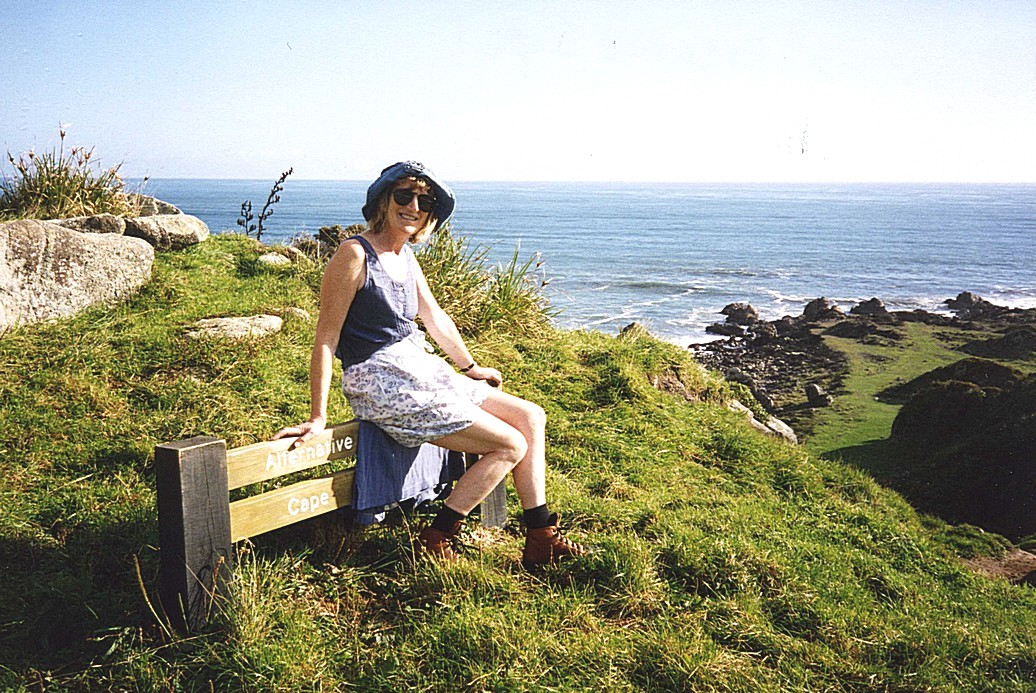
Adrian at Cape Foulwind
Rosie Cape at Cape Foulwind
We returned to Tauranga Bay and bought an ice cream (mine hokey pokey) from a very cheery chap, which we ate on the beach. We walked across the wide sands to rocks covered in millions of mussels. A chap came and asked us where the seals were, and thought you could see them from the rocks. We pointed him in the right direction. Suddenly the tide came swirling in.
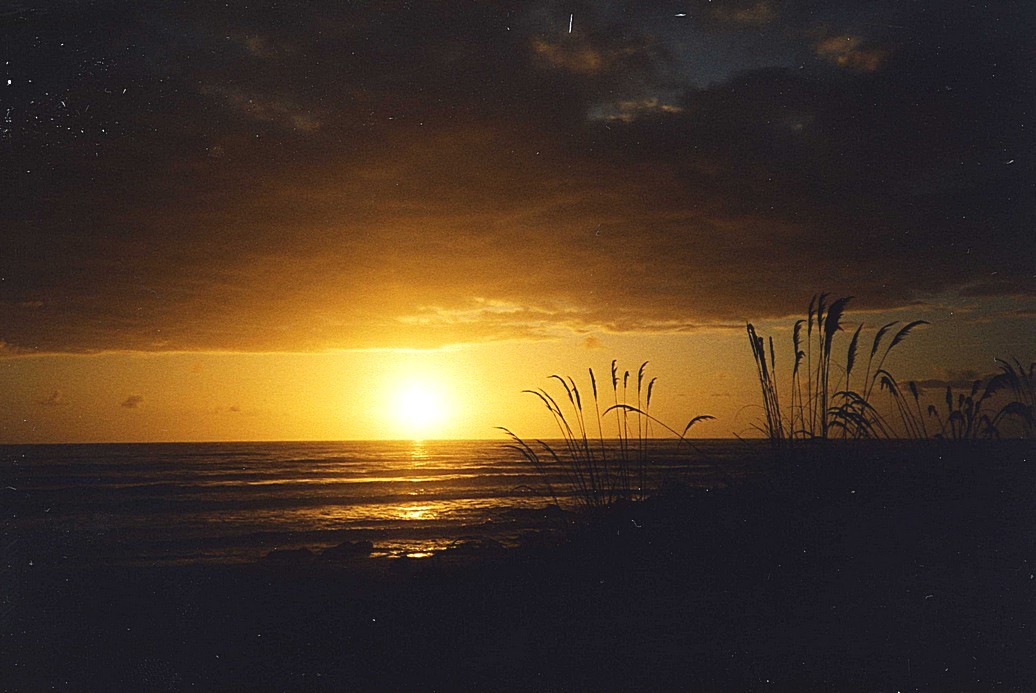
We returned reluctantly to the van. We had thought we could stay at an AA site we had passed, but found out that there was a site about 30 miles down the coast set in the Paparoa National Park. This was the place to go. We followed the setting sun down the coast, past one magical beach after another. This coast was so unexpectedly beautiful. We stopped to take a few sunset photos and arrived at Punakaiki at 6.00 pm.
We returned reluctantly to the van. We had thought we could stay at an AA site we had passed, but found out that there was a site about 30 miles down the coast set in the Paparoa National Park. This was the place to go. We followed the setting sun down the coast, past one magical beach after another. This coast was so unexpectedly beautiful. We stopped to take a few sunset photos and arrived at Punakaiki at 6.00 pm.
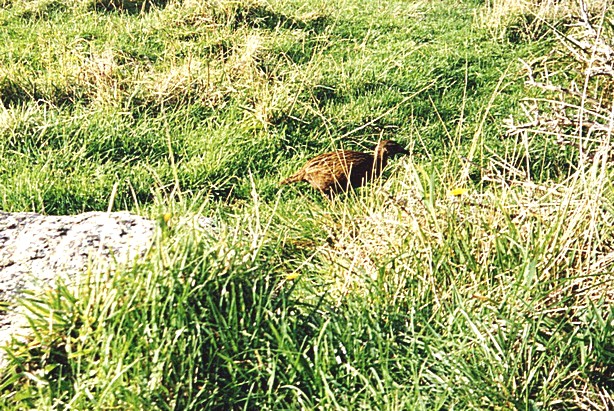
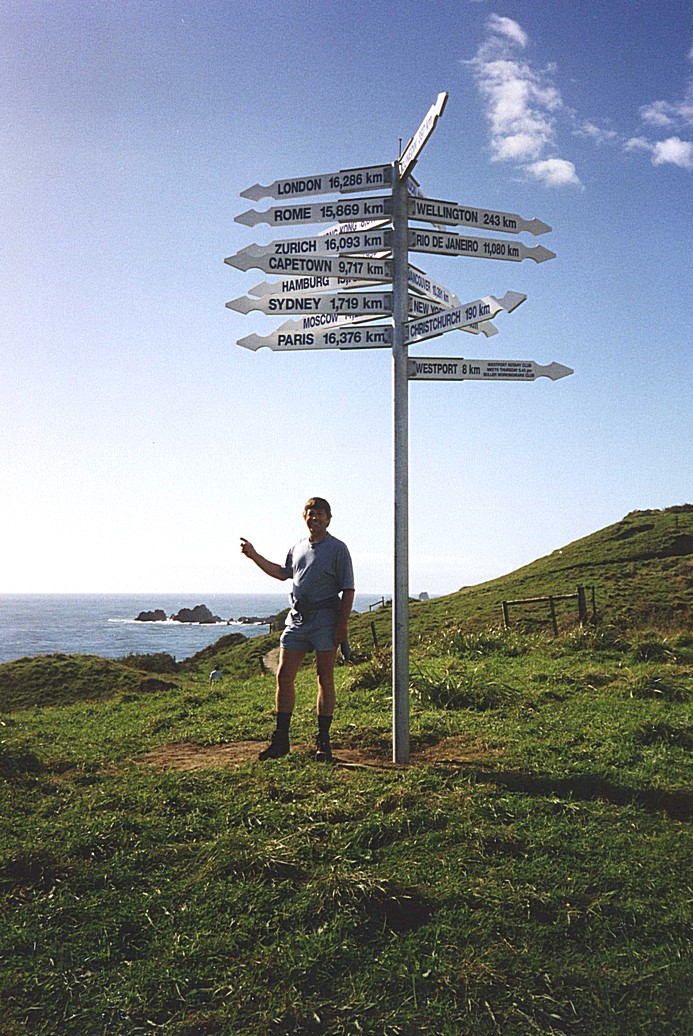
A Kiwi type bird? and Adrian by the distance signpost at Cape Foulwind
Although the site is on the beach, it is surrounded by trees and the walk to the beach is through a glade of shrubs and aloe type plants. We made a hasty walk to the beach, where a river also joins the sea. The temperature was dropping rapidly, but the sea still had a pink glow on it. A group of young people were camping on the edge of the beach. They had lit a fire and one was playing the accordion. It was quite magical – we thought of Chris de Burgh's, “ A perfect day” and it seemed just right!
We returned to our van for the realities of life – preparing supper, clearing up and doing some washing in the campsite machine.
We returned to our van for the realities of life – preparing supper, clearing up and doing some washing in the campsite machine.
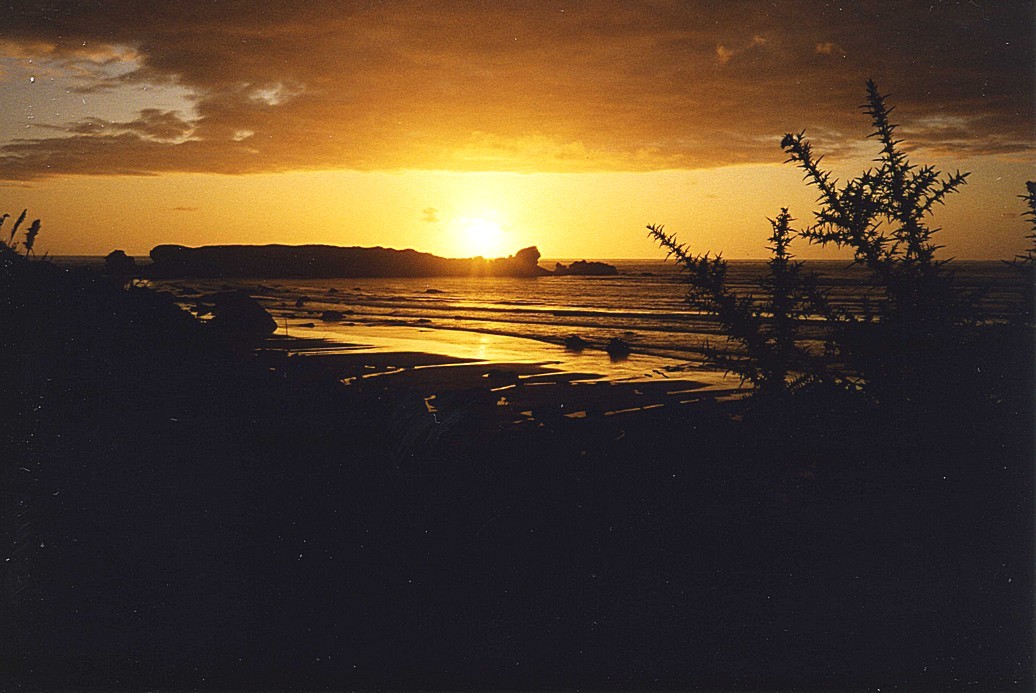
Sunday 16th April – Easter Day 274km
The night was cold – we were woken about 3.30 am by the heater coming on in the van. However, we awoke to a clear blue sky and the sun just ready to appear over the high rocky hills behind us. After showers – the worst we've had – we had yummy pancakes for breakfast and found our Easter Eggs. (Joke:- What's the best thing about getting old and losing your memory - You can hide your own easter eggs!). We walked down to the beach before leaving – the waves were quite high.
The night was cold – we were woken about 3.30 am by the heater coming on in the van. However, we awoke to a clear blue sky and the sun just ready to appear over the high rocky hills behind us. After showers – the worst we've had – we had yummy pancakes for breakfast and found our Easter Eggs. (Joke:- What's the best thing about getting old and losing your memory - You can hide your own easter eggs!). We walked down to the beach before leaving – the waves were quite high.
We drove along the road to the "Pancake Rocks and Blowholes". This was quite a dramatic place with wonderful rock formations and the sea bellowing up. It is more dramatic in rough weather, but we were happy with the hot sunshine. There were lots of visitors here, including two coach parties, but it is Easter Sunday and the place was beautifully set out to cope with visitors. We called in at an attractive craft shop opposite and bought one or two things, mostly wood.
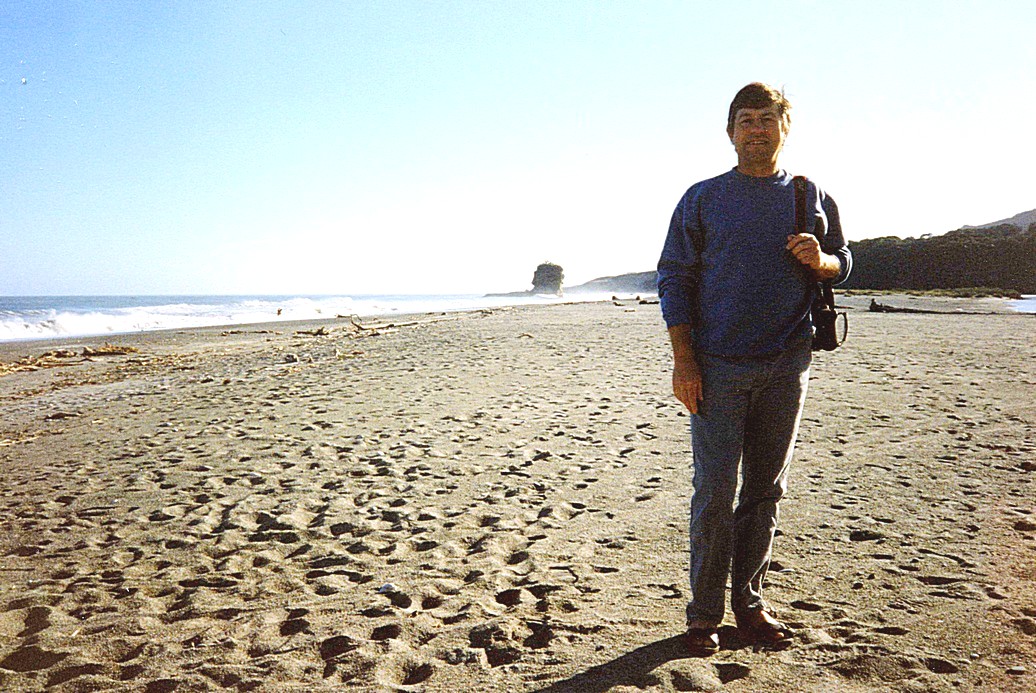
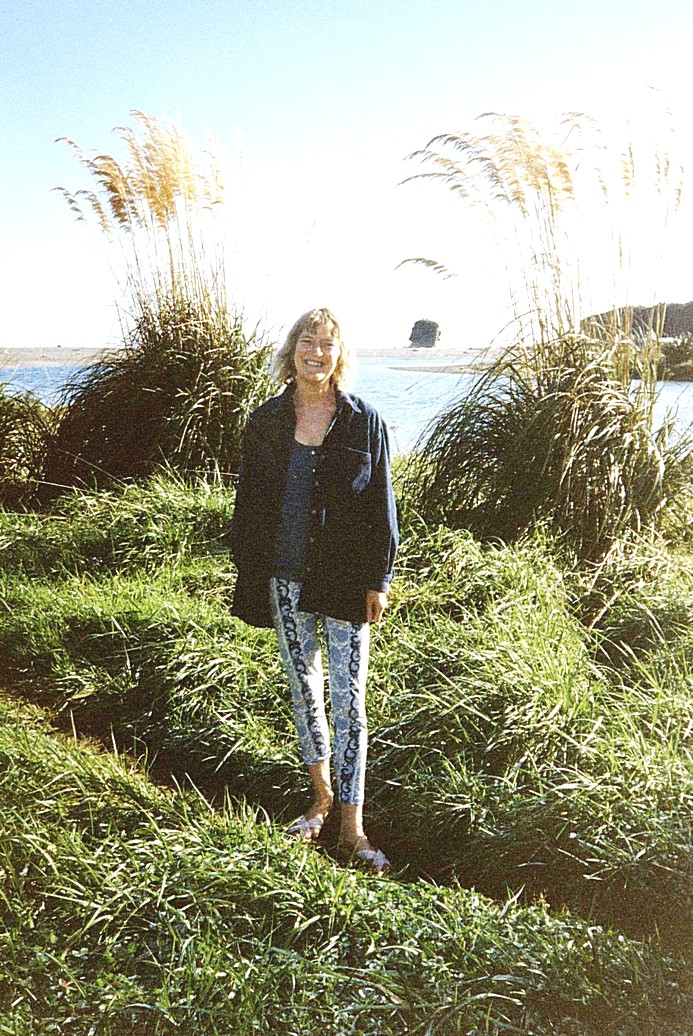
Us at Punakaiki Beach
We then headed for Greymouth, the mouth of the Grey River, which we now followed. Shortly upstream we came to the site of an old coal mine, the Brunner mine, named after Thomas Brunner. We stopped here to have a look around and immerse ourselves in a bit of industrial history.
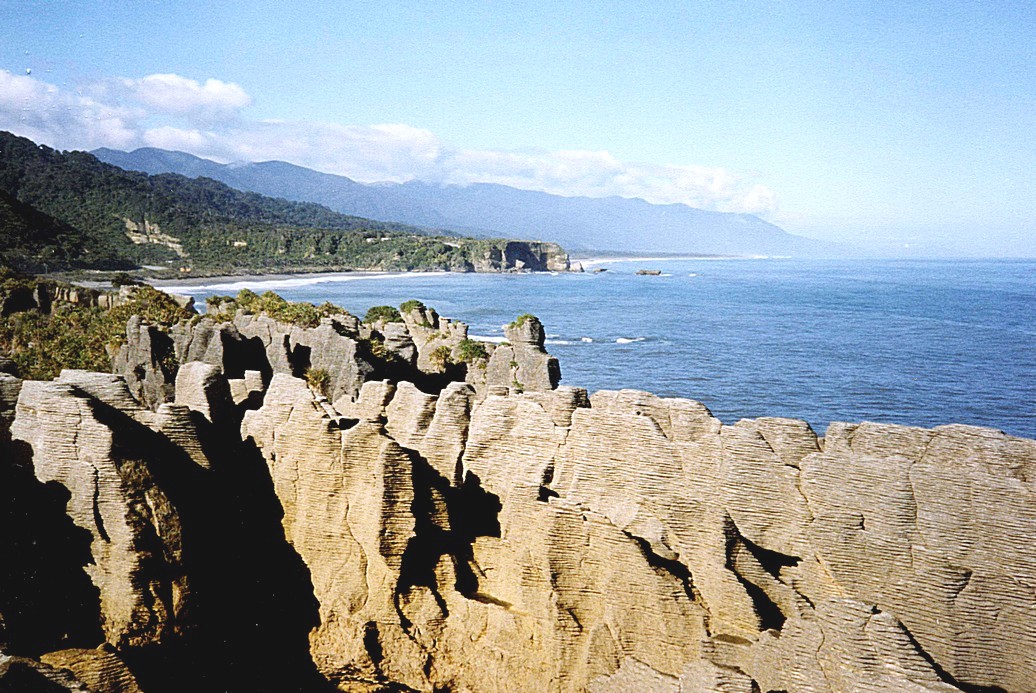
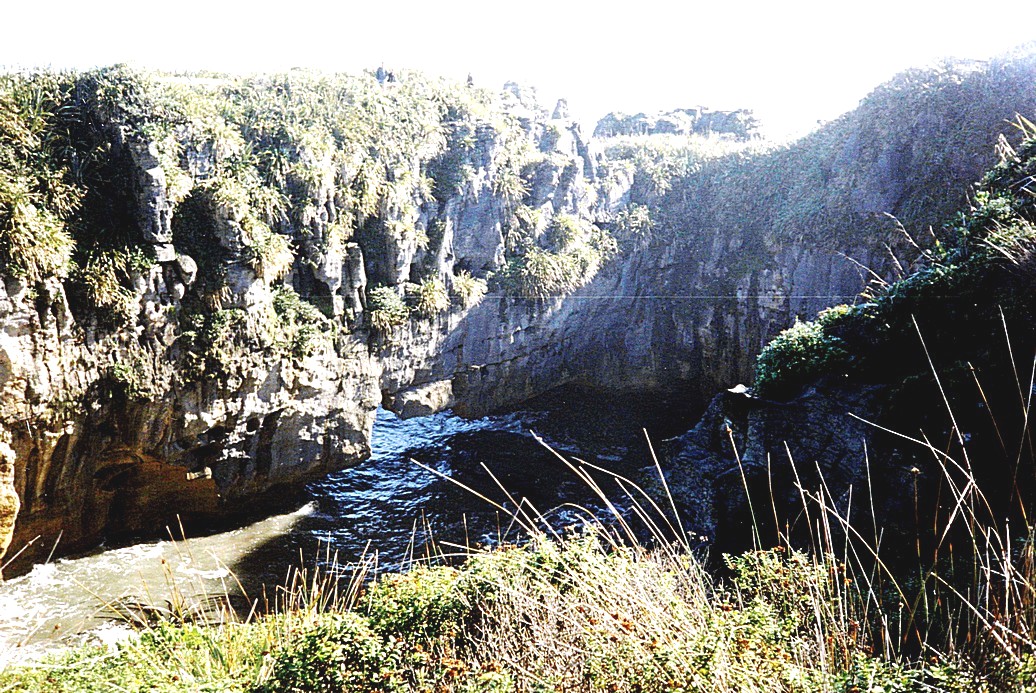
Pancake Rocks and surrounding area
A bit further on we stopped for lunch beside a rusty old steam engine. It was unexpectedly and beautifully hot and I had to be dragged away afterwards. (See New Zealand 2016 for an updated picture)
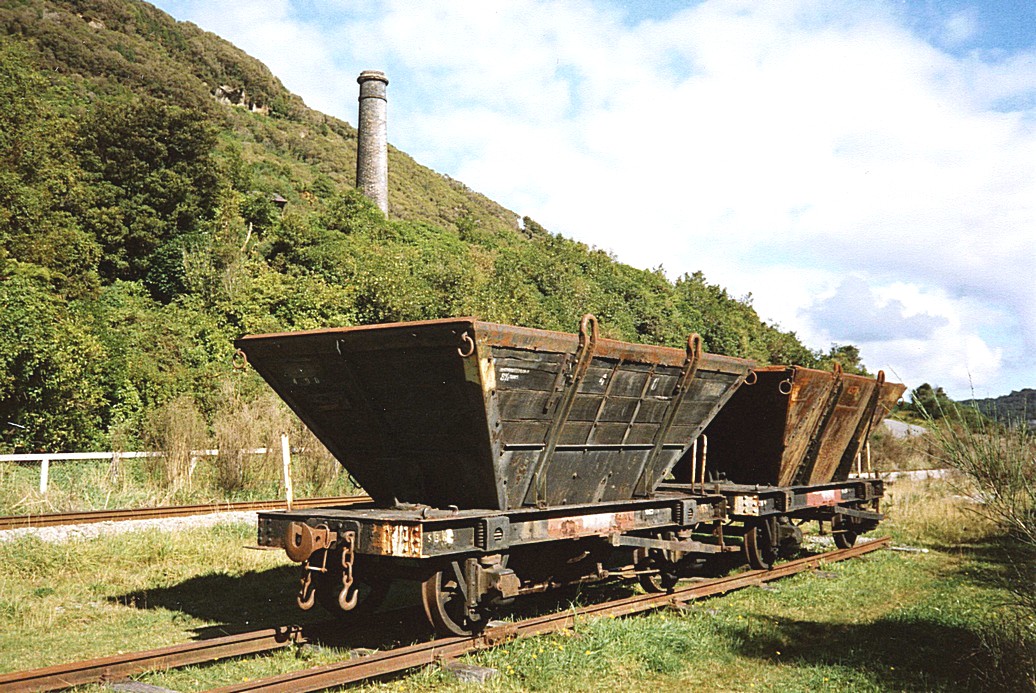
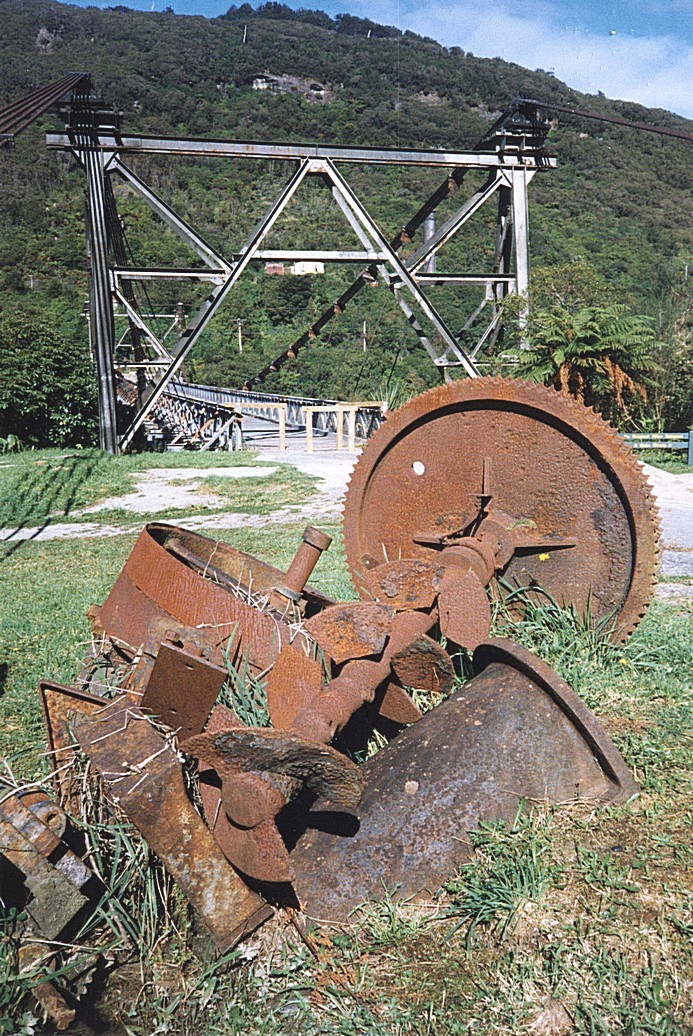
Industrial archaeology at the Brunner mine
We were now taking the road to Reefton. We followed one river after another today. This was still the Grey River. After Reefton it was the Inangahua, which we had crossed on our way from Murchison to the coast. We were now going through the Victoria Forest Park. There was virtually no habitation and the scenery was dramatic – constant steep hills, sometimes stark, sometimes forested. There was some habitation at Springs Junction, then we climbed to the Lewis Pass and down the other side. There was often a very long steep drop down and rarely a crash barrier.

Rosie by an old stationary steam engine
We now joined the Lewis River, travelling south and east. We stopped to eat our Easter eggs, trying to catch the last of the sun before it went behind the mountains. Then we went into cloud. We turned off to Hanmer Springs (last Easter we were at Hamners on Lundy!) and wondered if we were doing the right thing, as dozens of cars were passing us in the other direction and Hanmer was described as an "alpine village" (it is only at 350m, but has snow in the winter). There were three campsites here. We passed the first and drove into the town. The main thing here was the thermal pools (NZ$6 entry). We tried the "Top 10" campsite and were told – no power sites left – none at the other two sites either. It turns out that ALL of Christchurch comes up here for Easter – a bit like UK going to the New Forest. Our chap said to get a powered site, "You have to to be enrolled at birth. They come back every year. Your only chance is if someone dies!" (Certainly the people before us were booking a cabin already for next Easter). We settled for a non-power site, and the chap (very friendly and helpful) recharged our video battery for us. We found the last (?) remaining site on the outskirts of the campsite, next to open country.
We walked back into the "town" (5 – 10 minutes) and the thermal pools, where in the dark, we had a quick swim in the fresh water pool, followed by a dunk in some of the thermal pools. This was a real congregation point – hundreds of people sitting outside in the dark in the pools of 39°C water – the Romans must have been like this with their baths. People met up and chatted with their friends – we were quite out of it, being just the 2 of us!
Having soaked for an hour or so, we dressed and walked into the "town", where we found a delightful wine bar and enjoyed an excellent meal, beautifully presented – Adrian had steak and I had chicken breast and prawns. A very enjoyable evening. When we left to walk back at 9.15, everywhere was silent – not a soul anywhere. All these hundreds of people, and it seemed like a ghost town.

Waterfall near the Lewis Pass
Monday 17th April 162km
The sun didn't come up behind us as we'd hoped – it was a grey morning and stayed that way all day. I tried telephoning Thomas, forgetting at first to add the 1 to the code, then realising it was the answerphone, put the phone down immediately, but it had already grabbed the $3.30 charge!
Adrian attempted to make toast over the gaz ring to go with our spaghetti! Only half successful. Our "New World" brown loaf is keeping well. We had sat in bed writing the last few postcards, so it was 10.30 when we got going. The area around the thermal pools was quiet and empty. An hour later it was packed with cars and we passed lots of cars apparently coming out for the day.
We called briefly in at a shop, buying only milk and another phone card, then attempted a Woodland Walk at the far end of Hamner. It was delightfully autumnal – leaves underfoot, trees laden heavily with berries and the more subtle yellows, unlike a brilliant reds and oranges for autumn. The air too felt autumnal.
The sun didn't come up behind us as we'd hoped – it was a grey morning and stayed that way all day. I tried telephoning Thomas, forgetting at first to add the 1 to the code, then realising it was the answerphone, put the phone down immediately, but it had already grabbed the $3.30 charge!
Adrian attempted to make toast over the gaz ring to go with our spaghetti! Only half successful. Our "New World" brown loaf is keeping well. We had sat in bed writing the last few postcards, so it was 10.30 when we got going. The area around the thermal pools was quiet and empty. An hour later it was packed with cars and we passed lots of cars apparently coming out for the day.
We called briefly in at a shop, buying only milk and another phone card, then attempted a Woodland Walk at the far end of Hamner. It was delightfully autumnal – leaves underfoot, trees laden heavily with berries and the more subtle yellows, unlike a brilliant reds and oranges for autumn. The air too felt autumnal.
The walk was lovely, but as is often the case there were virtually no signs and many tracks, which made it difficult to know where one was going! It was a bit like a New Forest area, with attractive play and picnic areas and lots of streams. As we left, families were arriving to enjoy themselves. Easter is obviously "bigger" in New Zealand than we found it in Australia.
We had to backtrack the few miles from Hamner to the main road. Hamner is a bit like Las Vegas, a hive of activity in the centre of a wilderness. We approached again the Waiau Ferry Bridge (photoed previously on the way up to Hanmer Srings). We stopped to video it and were slightly annoyed that a car hurriedly pulled in beside us. They had just crossed the bridge and saw that someone was about to bungee jump! We missed the jump off, but were able to get plenty of video of the man hanging – specially for Thomas!
We had to backtrack the few miles from Hamner to the main road. Hamner is a bit like Las Vegas, a hive of activity in the centre of a wilderness. We approached again the Waiau Ferry Bridge (photoed previously on the way up to Hanmer Srings). We stopped to video it and were slightly annoyed that a car hurriedly pulled in beside us. They had just crossed the bridge and saw that someone was about to bungee jump! We missed the jump off, but were able to get plenty of video of the man hanging – specially for Thomas!
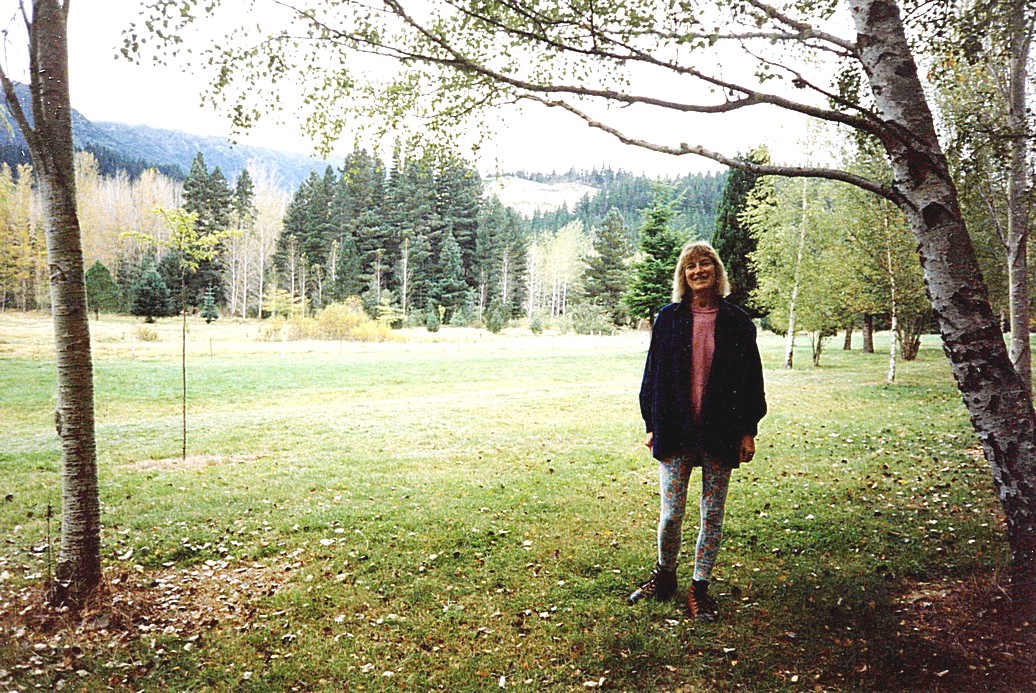
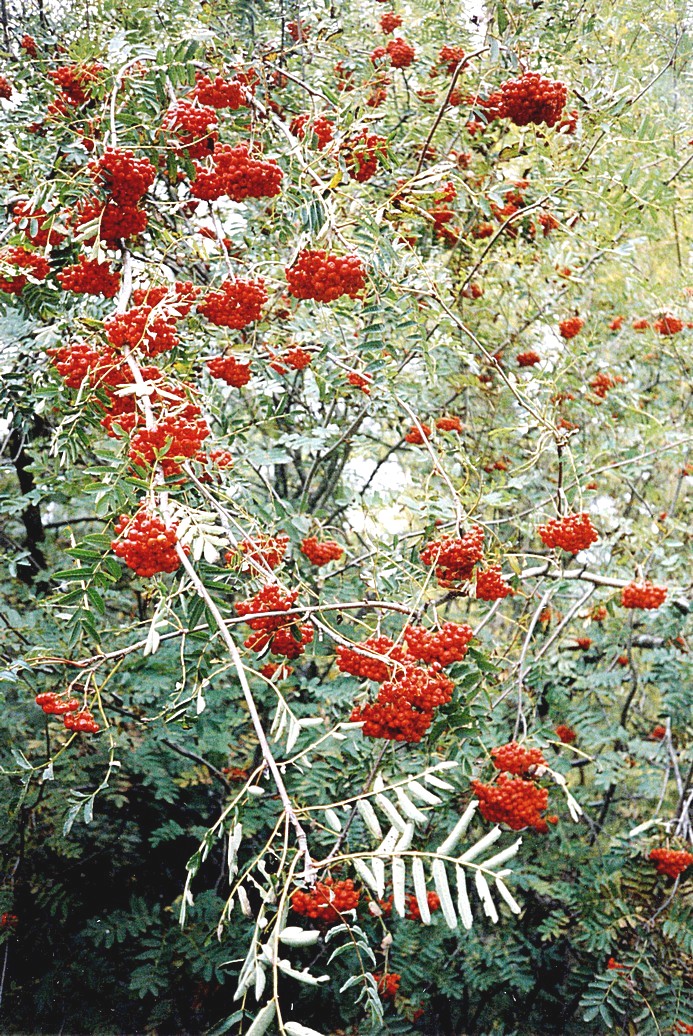
Rosie on our walk at Hanmer Springs and a mountain ash
We rejoined Highway 7 and turned south initially following the Waiau River, like other rivers in this area, and opaque turquoise. We crossed on a small road to the inland road to Kaikoura, as we were driving down the coast road tomorrow. The scenery here was extremely bleak and almost completely uninhabited with steep slopes and lots of tiny rivers in huge river beds, which obviously get full in winter. We stopped beside one of these for lunch, sitting in the van, as it was rather chilly – unlike yesterday's lunch stop.
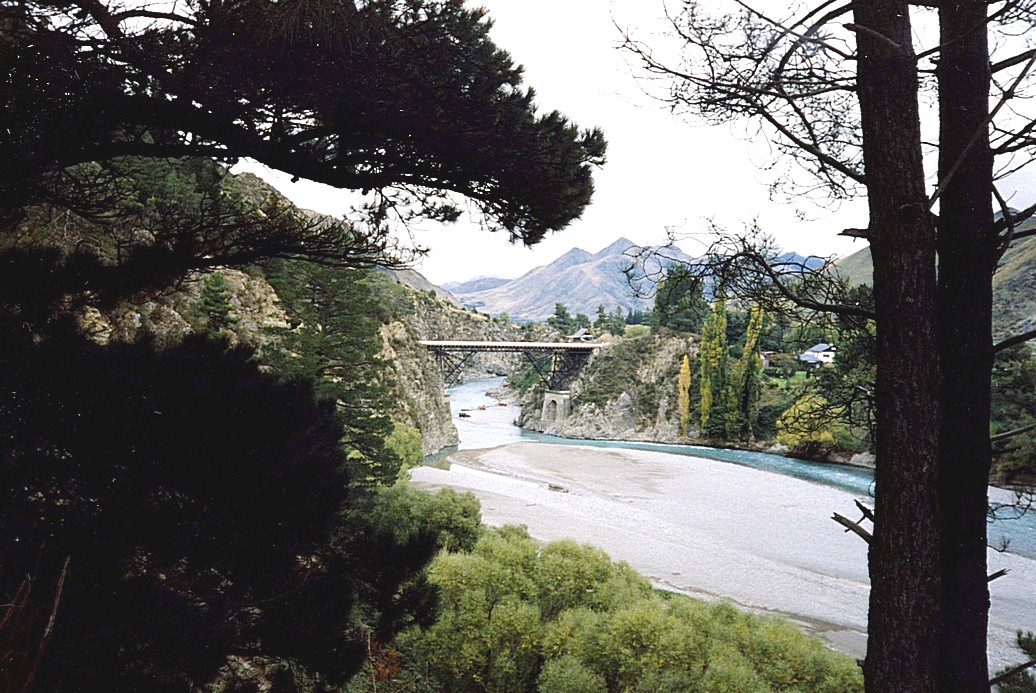
Bungee man hanging from Waiau River bridge (what do you mean you can't see him)
The road was unsurfaced for much of the 80 miles or so and just as we thought it was going on for ever, we caught a glimpse of the blue grey tranquil sea and we had almost arrived at Kaikoura.
Kaikoura is set on a peninsula, most of the town being on the northern side and not connected to the quieter southern side, but it is from here that all the whaling and dolphin trips start. We visited the southern side first – it was reminiscent of little English resorts in Kent or Sussex, but it really belonged to the wildlife – hundreds of birds of all varieties – the red billed gulls have colonies here – man seemed an intruder.
We drove through the town on the northern side, right around to the end, where we parked and realised that we were looking out to a colony of fur seals. We hurried over flat rocks to view them closer and were just about to leave when one popped up just in front of us! We were so transfixed that we almost got stranded, as the tide had come swirling in all around us!
Kaikoura is set on a peninsula, most of the town being on the northern side and not connected to the quieter southern side, but it is from here that all the whaling and dolphin trips start. We visited the southern side first – it was reminiscent of little English resorts in Kent or Sussex, but it really belonged to the wildlife – hundreds of birds of all varieties – the red billed gulls have colonies here – man seemed an intruder.
We drove through the town on the northern side, right around to the end, where we parked and realised that we were looking out to a colony of fur seals. We hurried over flat rocks to view them closer and were just about to leave when one popped up just in front of us! We were so transfixed that we almost got stranded, as the tide had come swirling in all around us!
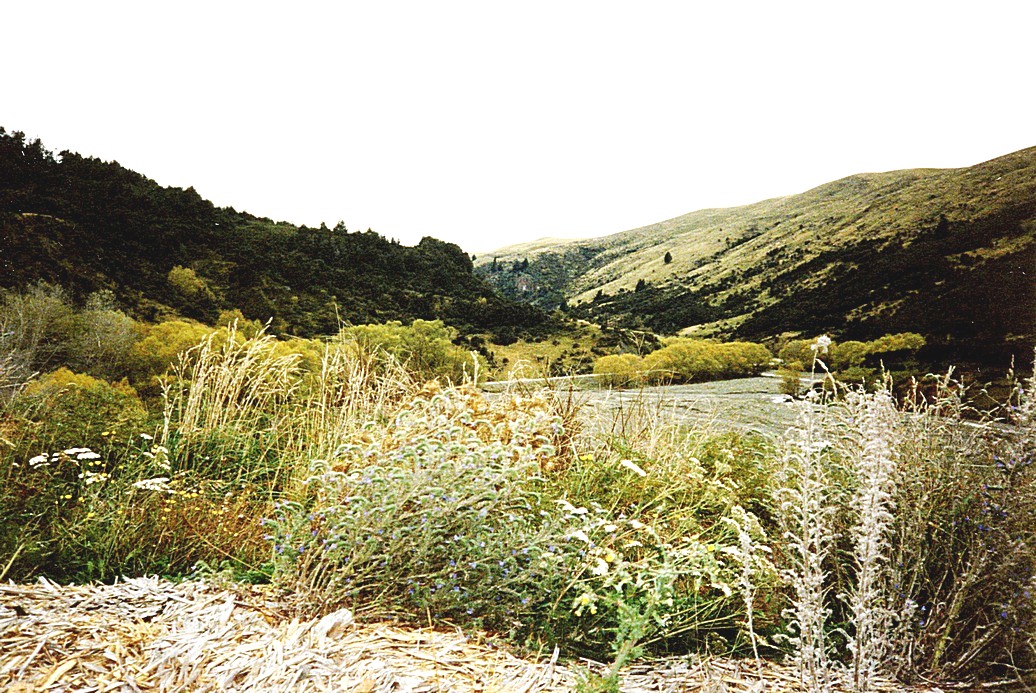
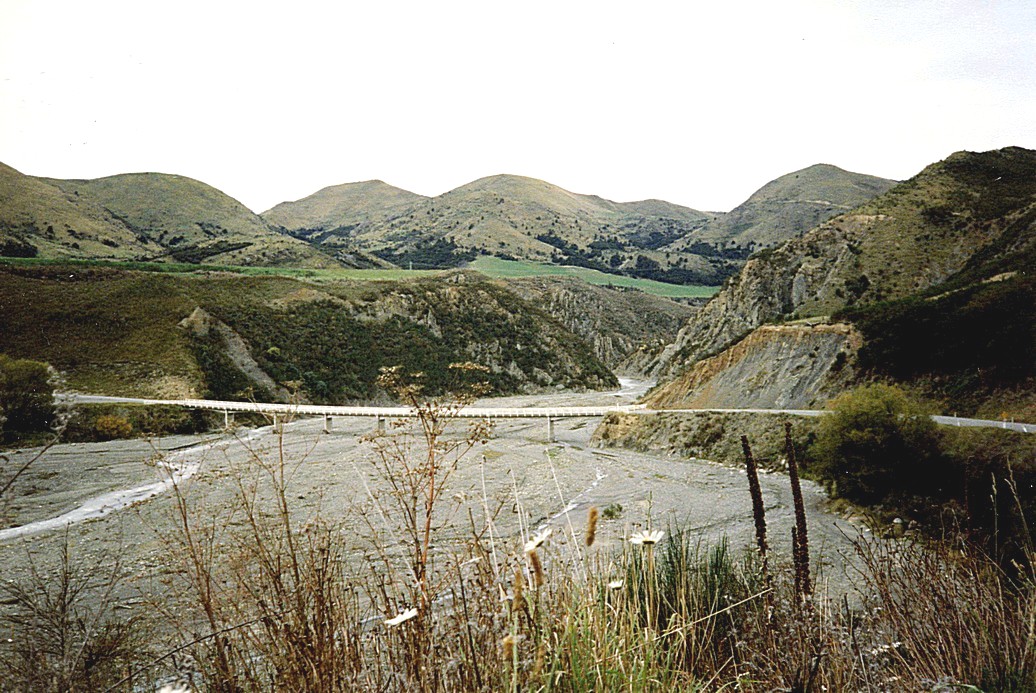
Our remote lunch stop on route 70
A bridge on remote route 70
We drove back through the town, stopped briefly at the tourist information and then went to check out our booking at the whalewatch office in the railway station, which is known as the whaleway station! The campsite we booked into was the other side of the track, with the sea just across the railway line. It was now 5.15 and we decided to return to the peninsular, where a small group of seals performed beautifully for us! We walked up the steep hill behind and then had a short walk along the top of the cliffs, returning while it was still just light.


Looking out to the seal colony and the wild sea at Kaikora
We returned to the campsite and organised ourselves for tomorrow's trip, before cooking supper of excellent steak. We also used the last of our phonecards getting through to Thomas.
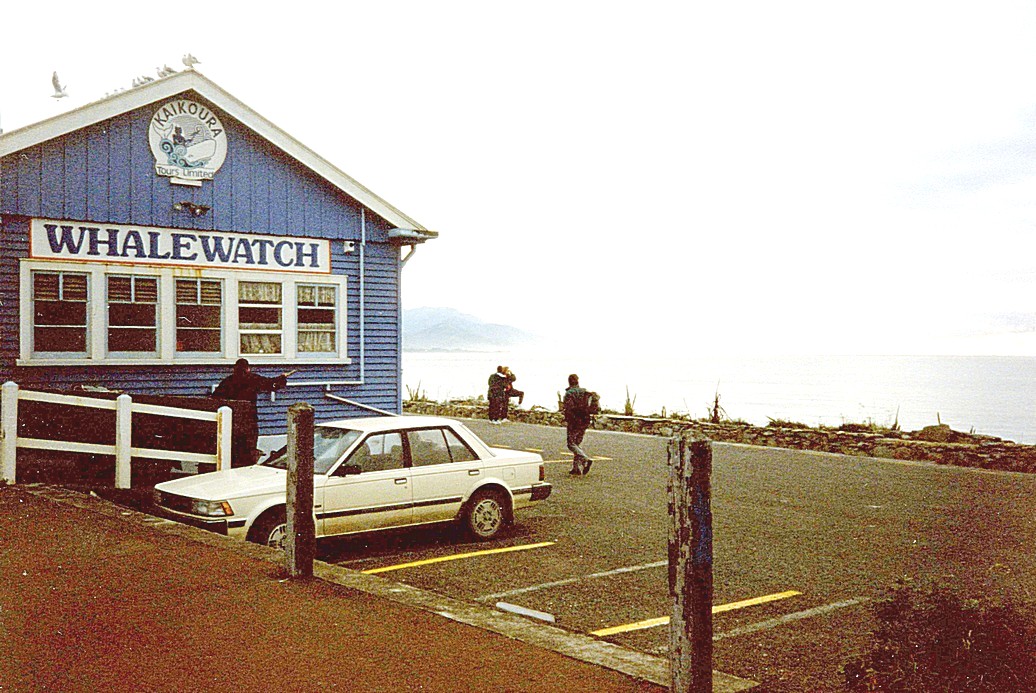
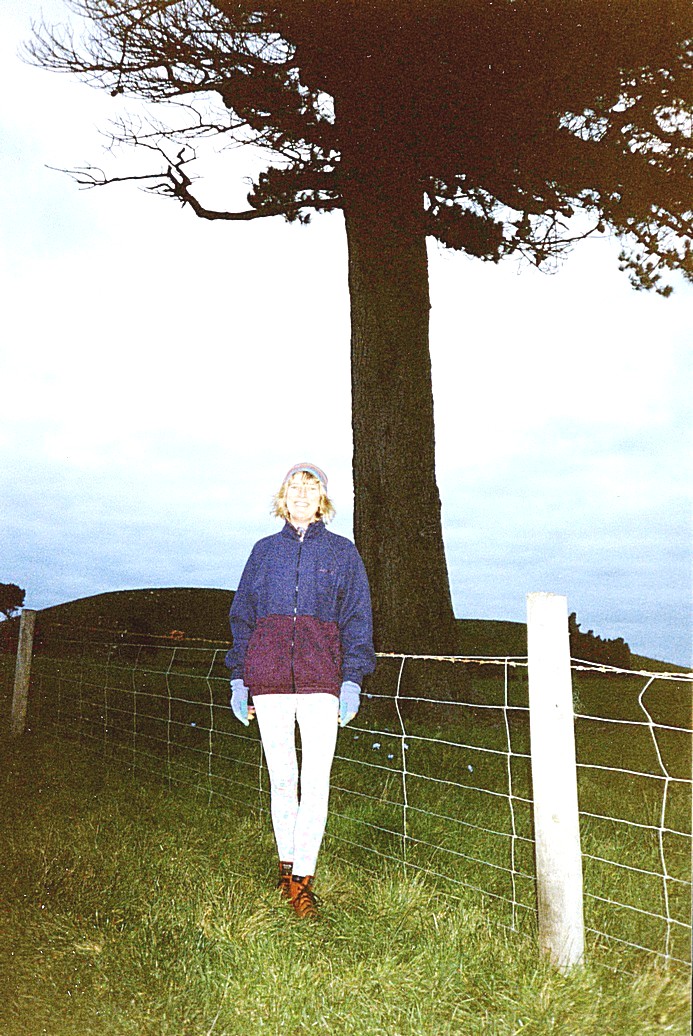
The Whaleway station and Rosie on top of the peninsular, Kaikora
Tuesday 18th April 201km
We had set the alarm for 7.00 am, but found ourselves awake just before. The morning was partly cloudy but dry. We had breakfast and organised ourselves to leave about 8.15, to drive round to the front of the "Whaleway station". Mist was rising from the sea and it looked very attractive with the steep mountains in the distance. We gathered together with the rest of our party. We were told that there would be a slight delay, but in fact on time, we all clambered into the coach to leave for the South Bay, where all the boats departed from. A tractor pulled a portable jetty into the edge of the sea, for the returning boat to pull up into. We managed to get seats at the back which was less jumpy. We had both taken our sea sickness pills!
Our boat was a small catamaran and the whole operation is run by Maoris. We did in fact spot 4 whales. They are male sperm whales. The reason that there are so many here is that the sea bed goes down very steeply fairly close to land, so there is ample food for the whales. We had a slight unpleasantness on board, when the crew stopped to pick up an empty gas cylinder, which they said could harm the whales. One passenger was agitated (perhaps rightly so) that they didn't know what the cylinder contained and should have left it there. We were given extra time to make up for this, but didn't in fact see any more whales.
We had set the alarm for 7.00 am, but found ourselves awake just before. The morning was partly cloudy but dry. We had breakfast and organised ourselves to leave about 8.15, to drive round to the front of the "Whaleway station". Mist was rising from the sea and it looked very attractive with the steep mountains in the distance. We gathered together with the rest of our party. We were told that there would be a slight delay, but in fact on time, we all clambered into the coach to leave for the South Bay, where all the boats departed from. A tractor pulled a portable jetty into the edge of the sea, for the returning boat to pull up into. We managed to get seats at the back which was less jumpy. We had both taken our sea sickness pills!
Our boat was a small catamaran and the whole operation is run by Maoris. We did in fact spot 4 whales. They are male sperm whales. The reason that there are so many here is that the sea bed goes down very steeply fairly close to land, so there is ample food for the whales. We had a slight unpleasantness on board, when the crew stopped to pick up an empty gas cylinder, which they said could harm the whales. One passenger was agitated (perhaps rightly so) that they didn't know what the cylinder contained and should have left it there. We were given extra time to make up for this, but didn't in fact see any more whales.
They took us in to see another group of fur seals, looking like so many large slugs lying on the rocks, but we had already seen lots of them. We were also shown an albatross. Neither of us felt a huge excitement afterwards – in fact we were both feeling a bit queasy still and after stopping for Adrian to buy a whalewatch T-shirt, we drove up to a lookout point for Adrian to have a snooze!
We drove back into Kaikoura – the name means crayfish - and thought we ought to try some crayfish. They are the size of small lobsters here and quite expensive. We settled on half a crayfish and chips, which we bought as a takeaway and ate in our van looking over the sea. It made a good lunch.
We drove back into Kaikoura – the name means crayfish - and thought we ought to try some crayfish. They are the size of small lobsters here and quite expensive. We settled on half a crayfish and chips, which we bought as a takeaway and ate in our van looking over the sea. It made a good lunch.
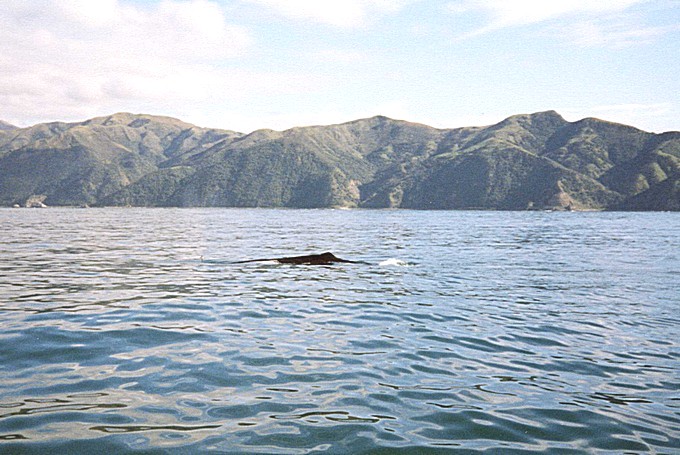
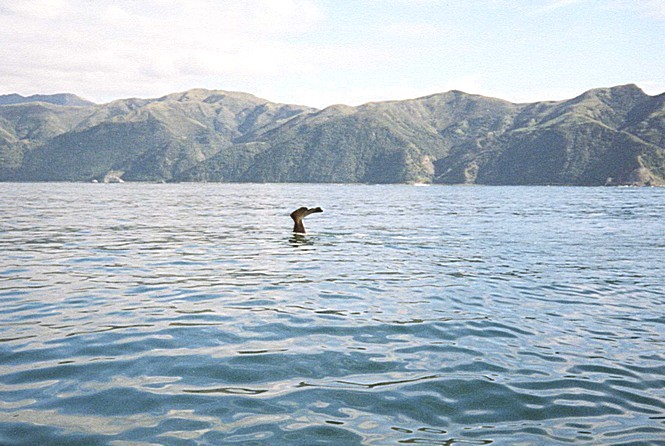
Well whales are difficult to photograph!
Afterwards we had a quick walk on the beach which was littered with interesting shaped pieces small driftwood – possibly from the roots of Norfolk Pines which fringed the beach.
We set off southwards, initially along the coast, then the road went inland. At Cheviot we took a small road off which went to the beach at Gore Bay. There was a small (empty) campsite here and we should have stayed, as apart from another site nearby which seemed to contain all static vans or storage vans, we didn't pass anything else. The road we were on was mostly unsurfaced, with virtually no traffic and wound its way around for about 25 miles. We eventually came to Motunau beach, which we thought would have a site, but it was just a cluster of little houses and a not particularly pretty beach. We continued the 15 km back to the state highway. I had been feeling decidedly dozy – the effect of the tablets. The light was fading fast but we hurried towards Christchurch, finally finding a site at Leathfield at 6.30, just as it was getting dark.
We set off southwards, initially along the coast, then the road went inland. At Cheviot we took a small road off which went to the beach at Gore Bay. There was a small (empty) campsite here and we should have stayed, as apart from another site nearby which seemed to contain all static vans or storage vans, we didn't pass anything else. The road we were on was mostly unsurfaced, with virtually no traffic and wound its way around for about 25 miles. We eventually came to Motunau beach, which we thought would have a site, but it was just a cluster of little houses and a not particularly pretty beach. We continued the 15 km back to the state highway. I had been feeling decidedly dozy – the effect of the tablets. The light was fading fast but we hurried towards Christchurch, finally finding a site at Leathfield at 6.30, just as it was getting dark.
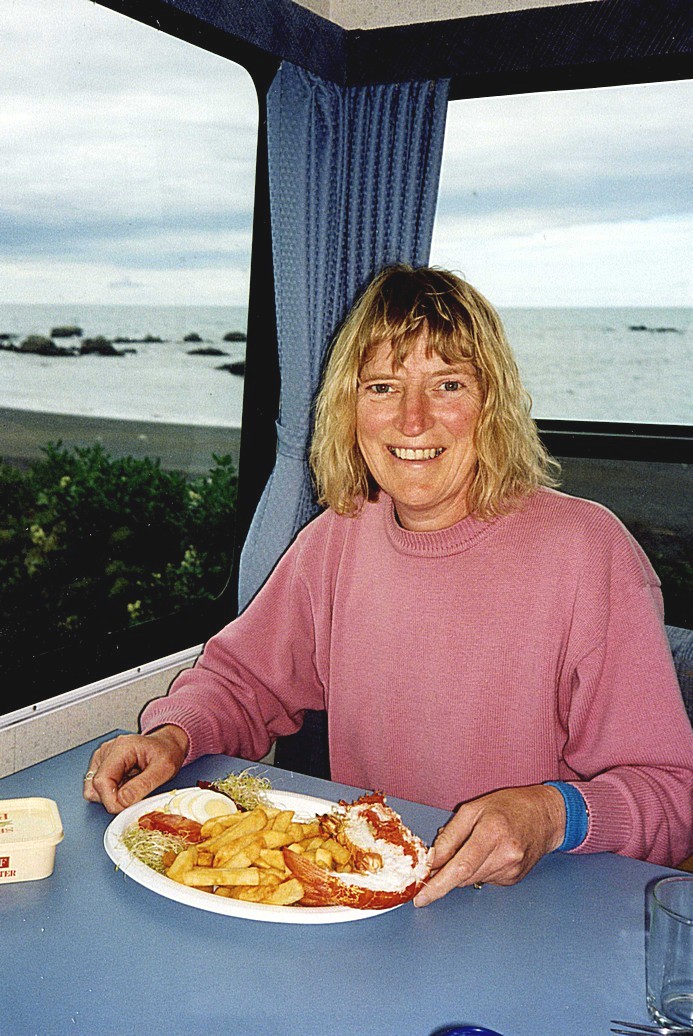
Rosie eating her crayfish and chips
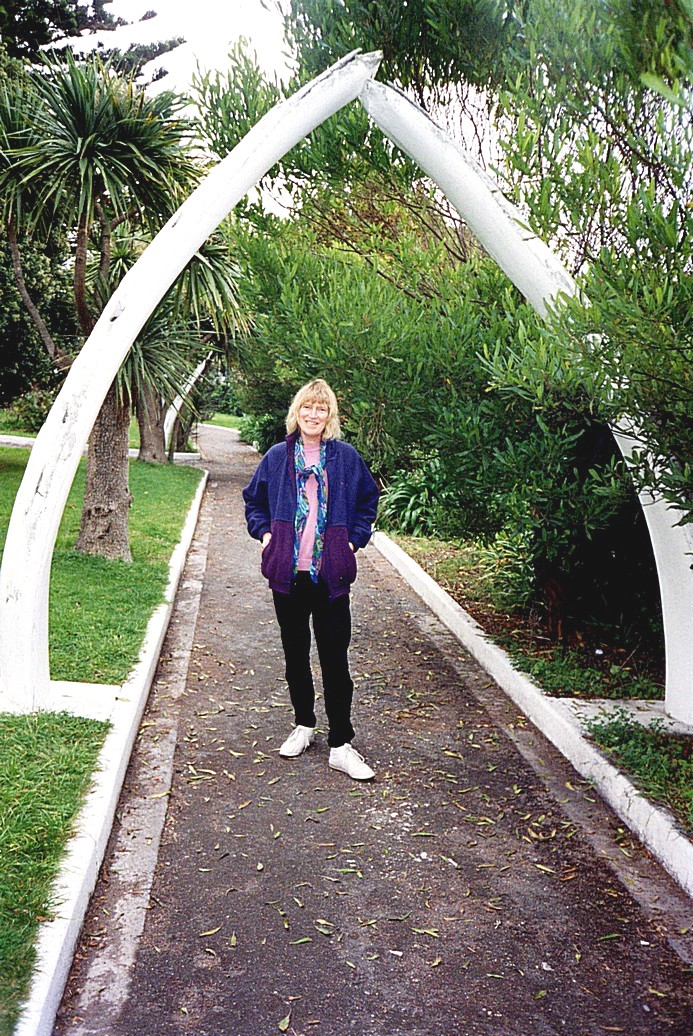
Rosie under whalebones, Kaikora
We had a quick walk on the blowy beach and settled into our van for our last night. We seem to be the only people here – Adrian told me he saw lights in 2 other caravans, but I didn't see anyone!
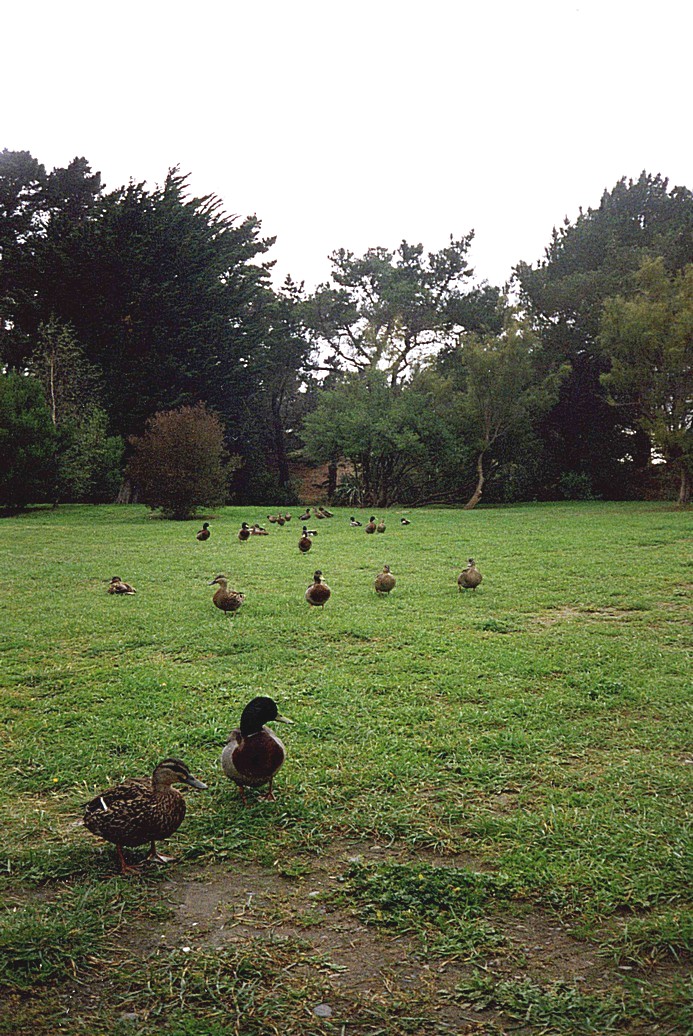
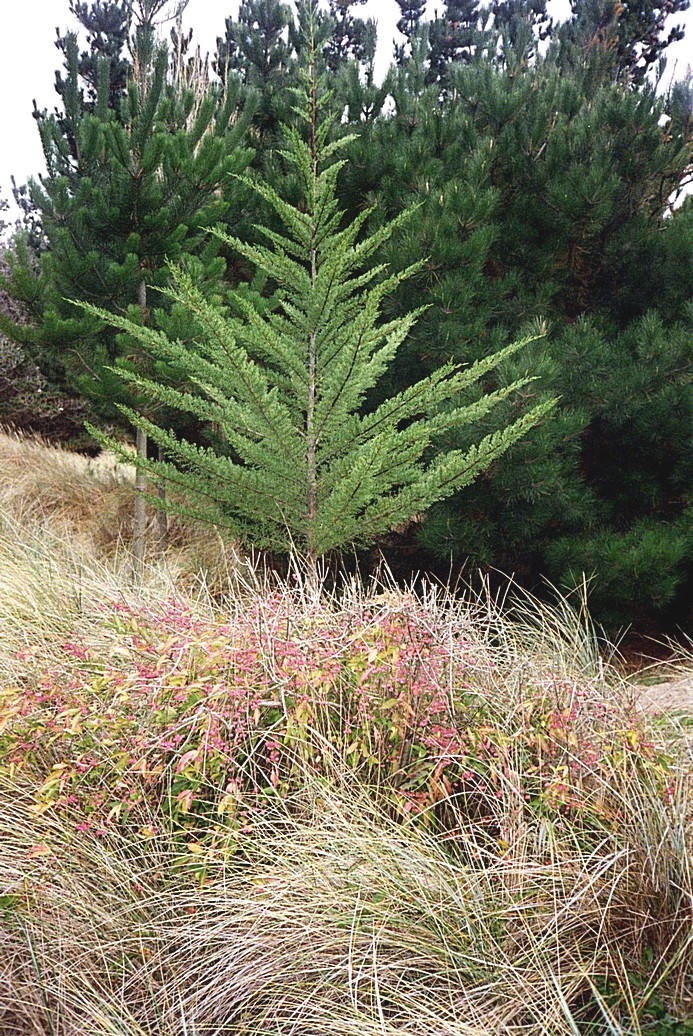
Ducks and a young Norfolk Pine at Leithfield Campsite
Wednesday 19th April
I awoke to see brilliant orange shining through the window. I got up and walked onto the wild beach, where the sun was rising. One man was throwing sticks to his dog. Soon afterwards we both walked down to the beach. It was wild and wonderful and so remote for just 20 miles or so from Christchurch.
I awoke to see brilliant orange shining through the window. I got up and walked onto the wild beach, where the sun was rising. One man was throwing sticks to his dog. Soon afterwards we both walked down to the beach. It was wild and wonderful and so remote for just 20 miles or so from Christchurch.
We came back to the van and had our last breakfast. Adrian had fun doing a recce of the van on video. We then packed everything up, so that it was almost midday by the time we left.
We drove down to the sea again at Waikuku Beach which was again wild and wonderful and absolutely desolate.
We drove down to the sea again at Waikuku Beach which was again wild and wonderful and absolutely desolate.
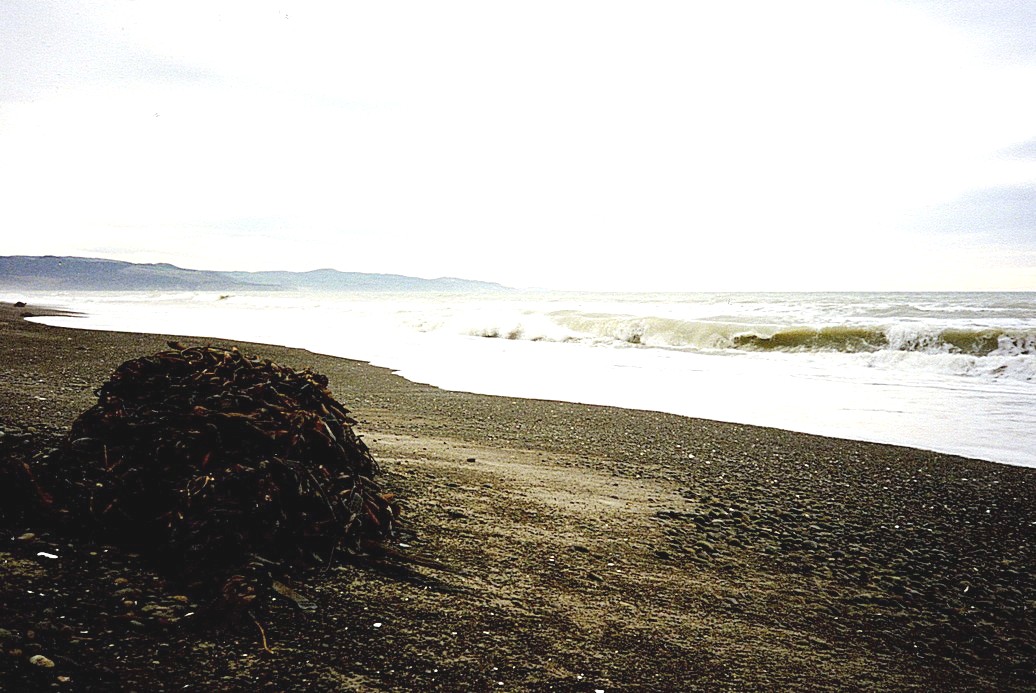
The wild beach at Leithfield
Nearby was Kairaki and the mouth of the Waimakariri River. We stopped here for lunch. There was a total of 9 people fishing, so it felt crowded. There was a lovely view down to misty hills beyond Christchurch. We had a short walk here – there was a campsite nearby.
A bit further on we turned off to the Pines Beach, where again we ran on to the completely remote and uninhabited beach with pine trees down to the beach, then small dunes with marram grass, then the beach of fine sand and then the rough sea.
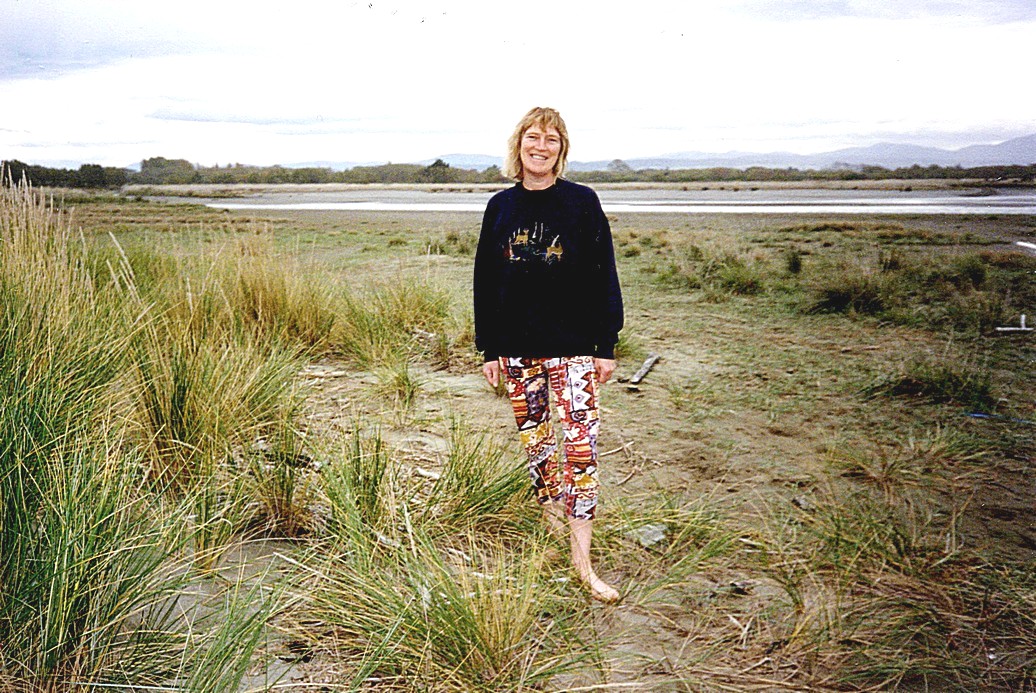
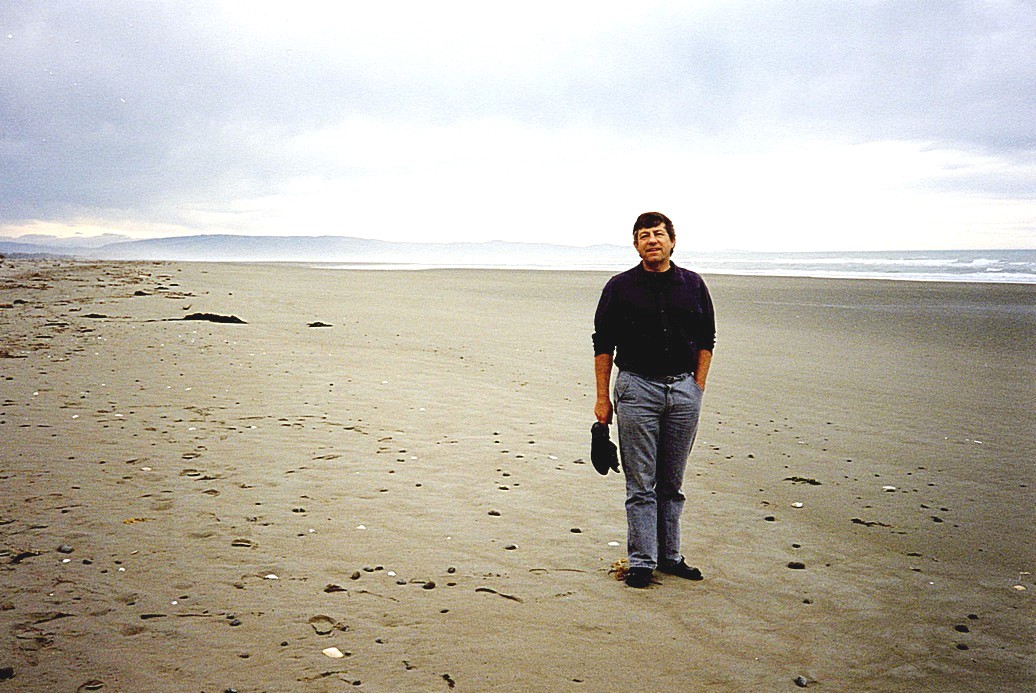
Us on wild Waikuku beach
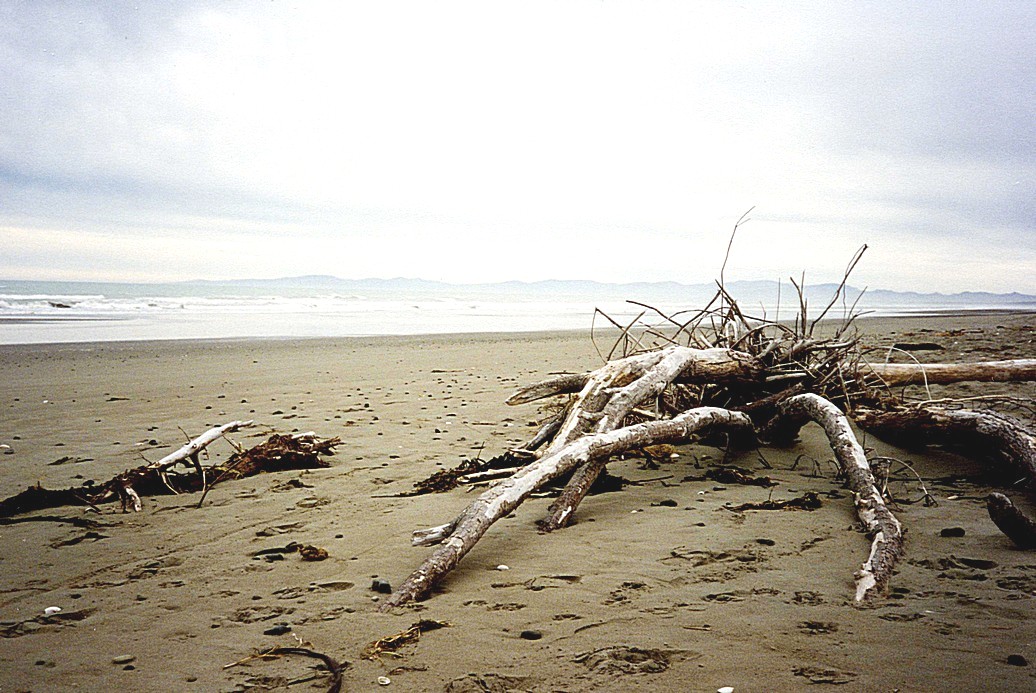
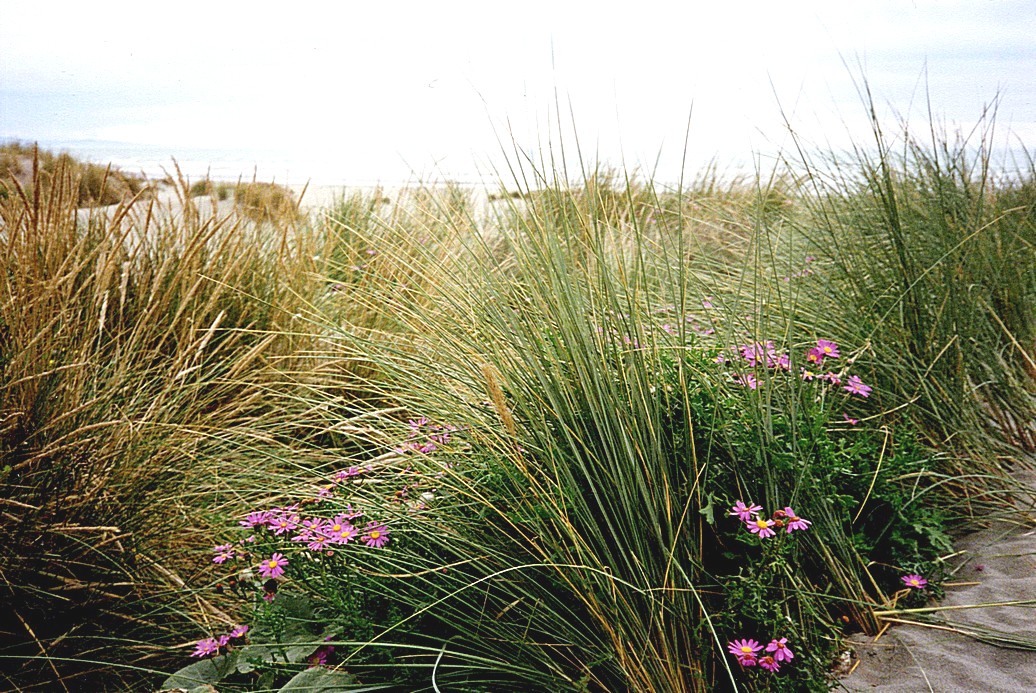
Another of Waikuku beach
And then Pines beach
After that we headed for Christchurch. We had a bit of trouble negotiating the town (lack of signposts again). We drove beside the River Avon for a while. We managed to find our way out to Lyttleton Harbour, going through a long tunnel. It had been a pleasant surprise to find Christchurch edged by high hills. At first we got to the port part, which was not interesting, but coming inland around this large harbour area was a final surprise – huge fingers of inlets almost uninhabited, like lots of drowned valleys.
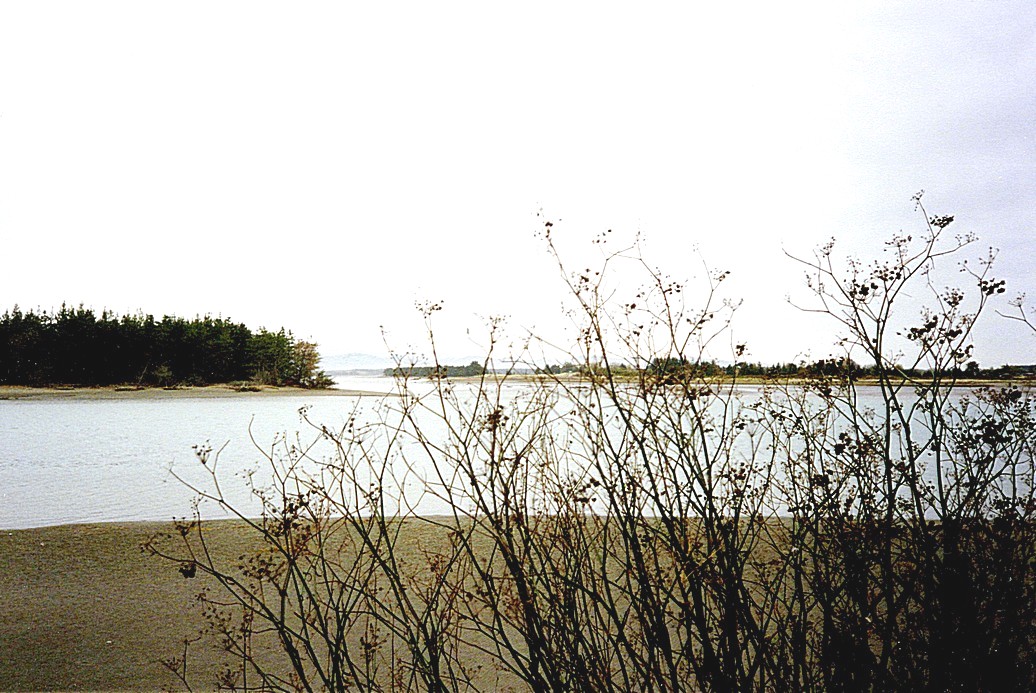
The mouth of the Waimakariri River
Lyttleton harbour backs to the Banks Peninsular which we didn't have time to visit, which is the remains of an extinct volcano. We stopped to view the scene and a rather deaf chap got chatting to us. He had a little goatee beard and said his wife's family was related to John of Gaunt.
We drove back to Christchurch over the Dyers Pass which gave us a wonderful view over Christchurch and the surrounding area.
We drove back to Christchurch over the Dyers Pass which gave us a wonderful view over Christchurch and the surrounding area.


Lyttleton Harbour
Back in Christchurch, we located our hotel – not terribly exciting, but with an enormous room – obviously a family room – one double and 2 single beds. We unloaded our stuff and drove out to Leisureport which is situated right by the airport. We were sorry to say goodbye to our van after such an enjoyable holiday. The formalities over, we caught the bus back into the city and then walked back the hotel. I felt like a tortoise who'd lost its shell.
After showers and getting changed – I put on a dress! – We walked back into Christchurch to look for somewhere to eat. Christchurch is a very clean and pleasant city and very quiet – even at 7.30, very few people about and very little traffic. After a stroll around, we found a restaurant which seemed quite busy – no airs and graces – make your order, wait for your number, but judging by the number of people there, obviously good value for money. We shared a starter – prawn cocktail and all prawns – and a pudding – Pavlova – all thick soft meringue and no fruit. Adrian had steak and I had sole. Also a bottle of house wine. And enjoyable evening. We walked off our meal by walking back to the hotel
After showers and getting changed – I put on a dress! – We walked back into Christchurch to look for somewhere to eat. Christchurch is a very clean and pleasant city and very quiet – even at 7.30, very few people about and very little traffic. After a stroll around, we found a restaurant which seemed quite busy – no airs and graces – make your order, wait for your number, but judging by the number of people there, obviously good value for money. We shared a starter – prawn cocktail and all prawns – and a pudding – Pavlova – all thick soft meringue and no fruit. Adrian had steak and I had sole. Also a bottle of house wine. And enjoyable evening. We walked off our meal by walking back to the hotel

View of Christchurch from the Dyers Pass - well it was getting dark!
Thursday 20th April
Not a good sleep – torrential rain, traffic, the adjacent car wash (and Adrian's snores!) meant rather a disturbed night. It was too hot with the duvet on and to cold with it off. Nevertheless, we woke at around 7.00 am and had a cup of tea in bed – no fine views today!
We sorted our luggage, so that we just had a little rucksack as hand luggage. We had breakfast of the last of "Pam's" muesli and crackers (last nights meal – served with prawn cocktail) and the last of Pam's marmalade.
Luckily the rain now stopped and we left our luggage downstairs and set off about 9.00 am for Christchurch. It took us 10 minutes to walk to the centre. We went into the cathedral – just like being in an English cathedral - some nice stained glass windows. It was only completed in 1903, so was in a very good state of repair. (Of course it was destroyed in the 2011 earthquake but they are finally intending to rebuild much of it by 2030!)
Not a good sleep – torrential rain, traffic, the adjacent car wash (and Adrian's snores!) meant rather a disturbed night. It was too hot with the duvet on and to cold with it off. Nevertheless, we woke at around 7.00 am and had a cup of tea in bed – no fine views today!
We sorted our luggage, so that we just had a little rucksack as hand luggage. We had breakfast of the last of "Pam's" muesli and crackers (last nights meal – served with prawn cocktail) and the last of Pam's marmalade.
Luckily the rain now stopped and we left our luggage downstairs and set off about 9.00 am for Christchurch. It took us 10 minutes to walk to the centre. We went into the cathedral – just like being in an English cathedral - some nice stained glass windows. It was only completed in 1903, so was in a very good state of repair. (Of course it was destroyed in the 2011 earthquake but they are finally intending to rebuild much of it by 2030!)
Outside we caught the "city loop" tram – a tourist attraction, where for $3 (just over £1) each, you could ride as much as you like for one hour (we only had one hour anyway). As we went to get on, a tram driver spoke to a gentleman behind us, and it turned out that he was the man responsible for preserving the trams. Our tram driver was very chatty and had all the time in the world to chat. After about 10 minutes we arrived at the edge of the Botanic Gardens which I wanted to visit but thought we hadn't time. We had a quick 15 minutes walk in them, passing lots of wonderful old trees of all sorts – just like a lovely English park, with a little river running through and all the autumn colours. Christchurch seems more English than England – very like Cambridge say.
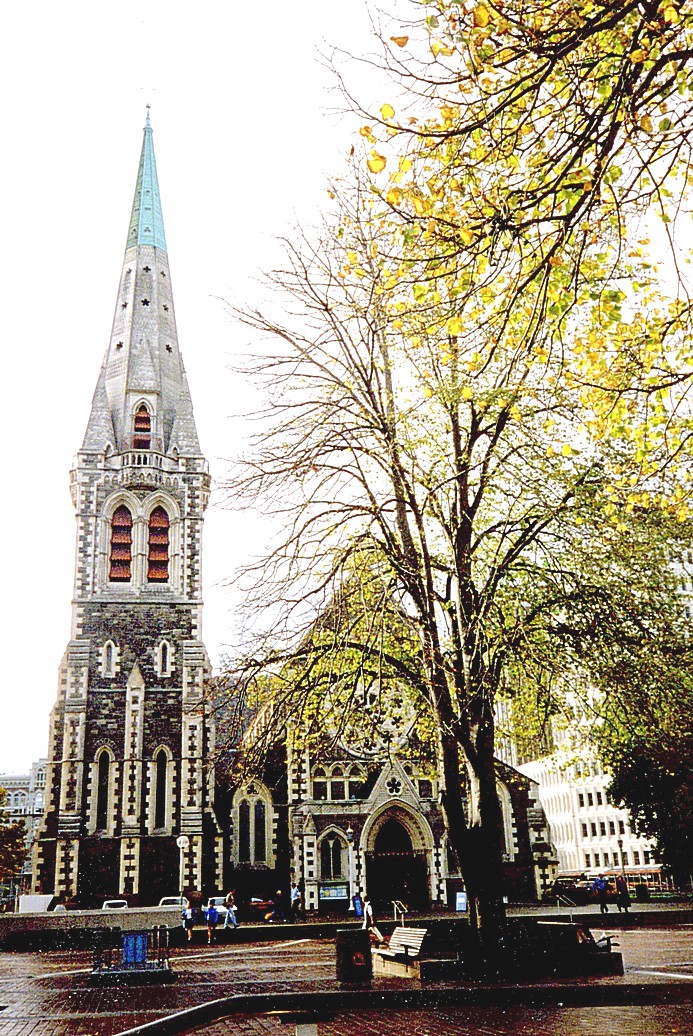
Christchurch Cathedral before the earthquake
We had viewed part of a tourist advert on TV this morning, advertising Christchurch and I quite thought it was England – just the people seemed to have more time and there is so little traffic for a "city"!
We walked back to the tram stop and there was our tram – it had done the "loop" and was back again. We continued the rest of our circuit, while the driver and a conductor this time, chatted. We are alighted at the square and bought a hokey pokey ice cream from a friendly lady and sat to enjoy these. A spiritualist lady came up and spoke to me just as we were about to leave, then we had a quick walk back our hotel, arriving just on 11 o'clock as our shuttle bus, driven by a non-commutative young girl – arrived.
Now was the time to leave for the airport – we picked up a couple and their 3 young children, and dropped them at Leisureport to collect their camper van (can we start again please?) We had passed all the neat autumn suburban gardens again, many with their pink Nerines in front (I planted my just before we left!)
At the airport we booked straight in, then had a quick look around the shops – I at last bought my Paua ring which I have wanted. Our flight to Auckland – 1hour 9 minutes! was pleasant. At first we could see the Canterbury plains and the barren hills beyond. Then we went into cloud. We were served a pleasant snack of open ham and cheese sandwich and a Danish pastry.
At Auckland we had had 3 hour wait and had hoped to get a trip out, but this proved not possible. We spent time looking in various shops, particularly the bookshops, then we walked across to the International Departure (900 m). It was pretty warm and humid now. At the International Terminal we wasted more time, looking in shops and having a snack (I had some much missed toast!) – that we almost missed the last call for our flight! Our plane to Fiji had only 80 people on it!
(While waiting at Christchurch, the man next to us, a farmer, got chatting and relived his 1963 trip to UK and Europe – by ship – with a friend, He had bought and later sold a camper van. He got so involved in talking to us, we nearly missed our flight call!)
Our 3 hour flight to Nadi was pleasant with a nice meal with good dry wine. We watched Mr Bean (Strepsils) and Clive James on the 60's. We arrived a little ahead of schedule (8.00 pm).
We were soon through customs and greeted by lots of friendly Fijian people and given a necklace each to wear. Everyone smiles and says "Bula" (hello). We were transported by minibus for the journey to the "Hideaway Resort". This was longer than we expected and it was 10 o'clock when we arrived. Being dark, we couldn't see much of the countryside, but it appeared very English – English road signs and English weather – it was raining! It seems we hit the rainy season. Very humid though. Our driver talked quite a lot – mostly to the other people in the van. He said tourism was the first industry and sugar the 2nd. We couldn't hear much of what he was saying - our ears were still recovering from the flight – mine didn't recover at all at Auckland.
The Hideaway Resort is very attractive. We have a little "chalet" right on the shore, fringed with coconut palms. Exotic plants abound. The towels in our room were fanned out with a red hibiscus flower and greenery in the centre. We had a little walk around outside (in the warm rain). A disco was playing foul music – luckily away from our room. A tiny lizard ran across our floor. On the beach were tiny crabs scurrying and lots of bits of coral. Fish leapt out of the sea. Pretty tired, at midnight, we fell into bed.
We walked back to the tram stop and there was our tram – it had done the "loop" and was back again. We continued the rest of our circuit, while the driver and a conductor this time, chatted. We are alighted at the square and bought a hokey pokey ice cream from a friendly lady and sat to enjoy these. A spiritualist lady came up and spoke to me just as we were about to leave, then we had a quick walk back our hotel, arriving just on 11 o'clock as our shuttle bus, driven by a non-commutative young girl – arrived.
Now was the time to leave for the airport – we picked up a couple and their 3 young children, and dropped them at Leisureport to collect their camper van (can we start again please?) We had passed all the neat autumn suburban gardens again, many with their pink Nerines in front (I planted my just before we left!)
At the airport we booked straight in, then had a quick look around the shops – I at last bought my Paua ring which I have wanted. Our flight to Auckland – 1hour 9 minutes! was pleasant. At first we could see the Canterbury plains and the barren hills beyond. Then we went into cloud. We were served a pleasant snack of open ham and cheese sandwich and a Danish pastry.
At Auckland we had had 3 hour wait and had hoped to get a trip out, but this proved not possible. We spent time looking in various shops, particularly the bookshops, then we walked across to the International Departure (900 m). It was pretty warm and humid now. At the International Terminal we wasted more time, looking in shops and having a snack (I had some much missed toast!) – that we almost missed the last call for our flight! Our plane to Fiji had only 80 people on it!
(While waiting at Christchurch, the man next to us, a farmer, got chatting and relived his 1963 trip to UK and Europe – by ship – with a friend, He had bought and later sold a camper van. He got so involved in talking to us, we nearly missed our flight call!)
Our 3 hour flight to Nadi was pleasant with a nice meal with good dry wine. We watched Mr Bean (Strepsils) and Clive James on the 60's. We arrived a little ahead of schedule (8.00 pm).
We were soon through customs and greeted by lots of friendly Fijian people and given a necklace each to wear. Everyone smiles and says "Bula" (hello). We were transported by minibus for the journey to the "Hideaway Resort". This was longer than we expected and it was 10 o'clock when we arrived. Being dark, we couldn't see much of the countryside, but it appeared very English – English road signs and English weather – it was raining! It seems we hit the rainy season. Very humid though. Our driver talked quite a lot – mostly to the other people in the van. He said tourism was the first industry and sugar the 2nd. We couldn't hear much of what he was saying - our ears were still recovering from the flight – mine didn't recover at all at Auckland.
The Hideaway Resort is very attractive. We have a little "chalet" right on the shore, fringed with coconut palms. Exotic plants abound. The towels in our room were fanned out with a red hibiscus flower and greenery in the centre. We had a little walk around outside (in the warm rain). A disco was playing foul music – luckily away from our room. A tiny lizard ran across our floor. On the beach were tiny crabs scurrying and lots of bits of coral. Fish leapt out of the sea. Pretty tired, at midnight, we fell into bed.

.jpg)
All that is left of the Cathedral (from our 2016 diary)
A beautiful tree in the Botanic gardens
Friday 21st April
What can I say about Fiji? It's wonderful. Today's weather wasn't fantastic, but was so warm and the rain didn't matter. I awoke early and drew back the curtains on the front and the side of our chalet. The view was what one imagines of paradise – palm trees, luscious plants and then the sea.
What can I say about Fiji? It's wonderful. Today's weather wasn't fantastic, but was so warm and the rain didn't matter. I awoke early and drew back the curtains on the front and the side of our chalet. The view was what one imagines of paradise – palm trees, luscious plants and then the sea.
We had our cup of tea enjoying the view and then sauntered up for breakfast – what surroundings! I had fruit, which was a plate of various melon, banana and citrus fruit – I'm not sure what! Then toast and very salted butter, which Adrian enjoyed! And strawberry jam. Tea and coffee and the smiling happy ladies ever ready to oblige!
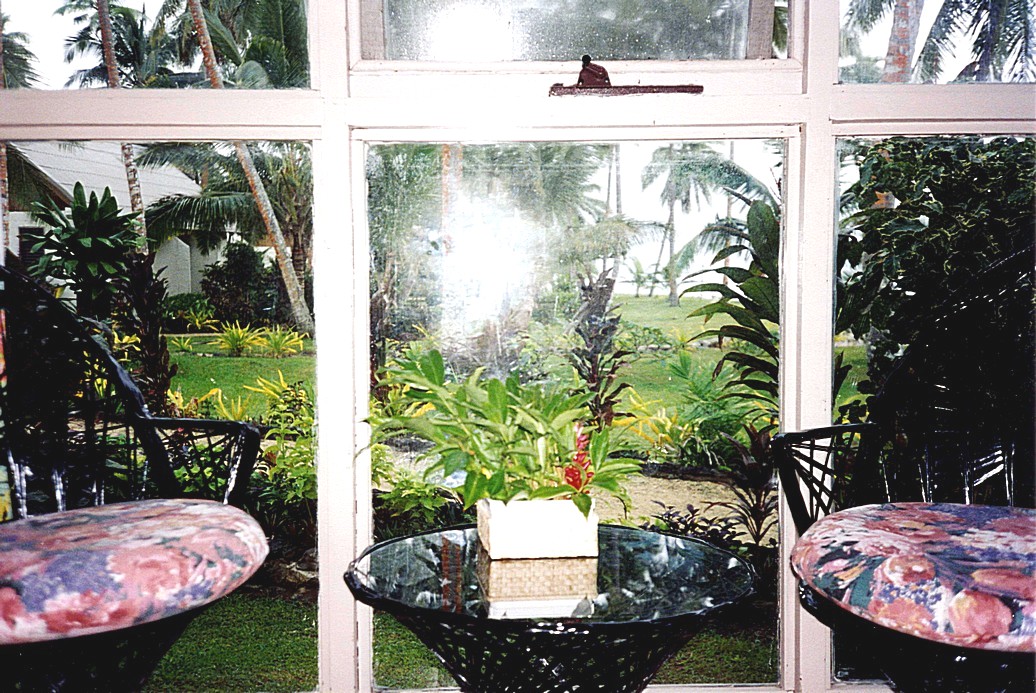
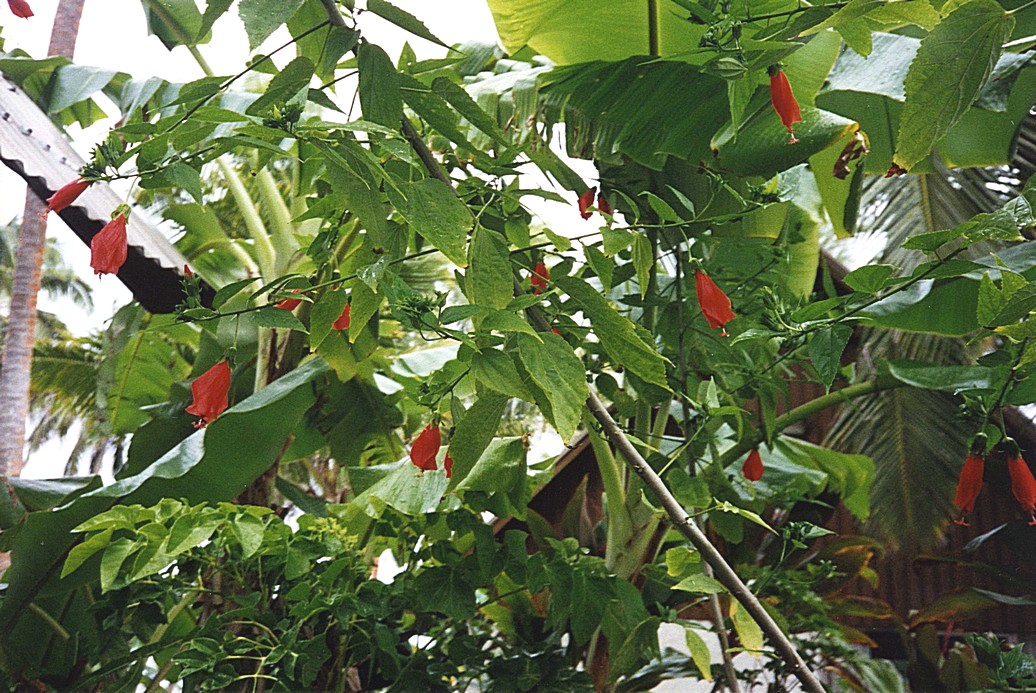
View through our chalet window
Outside our chalet door
We enquired about the glass bottomed boat, but thought that we would prefer to go snorkelling. We hired (free of charge) masks, snorkels and flippers from the jolly activities lady. Then what a delight! The Coral comes right into the shore, so we spent the next hour or so thrilled by the magic of the Coral Reef. Coral so beautiful – branching coral tinged with blue or purple; brain coral; – all kinds. And the fish – a myriad. Perhaps 20 or 30 different sorts – tiny deep blue ones which lived amongst the Coral – also large starfish of the same rich blue – black and white zebra fish; fish with a pretend eye at the rear; Brown plaice shaped fish which came to say hello; camouflaged "giraffe" skin fish; some of which tried to see you off. Shoals of long skinny see-through fish near the surface. Such magic! We had entered another world – the surface of the sea was the end of it. The great delight was that it was all at standing depth, with sandy bottom to stand in between. As I kept getting water in my mask and tube, it was easy to stop and empty them.
Eventually we thought we ought to come in. The next joy was our lovely shower which we stood under until all the salt was washed off our skin and our hair was clean.
It was now nearly lunchtime. I did have a quick swim in the pool.
Eventually we thought we ought to come in. The next joy was our lovely shower which we stood under until all the salt was washed off our skin and our hair was clean.
It was now nearly lunchtime. I did have a quick swim in the pool.
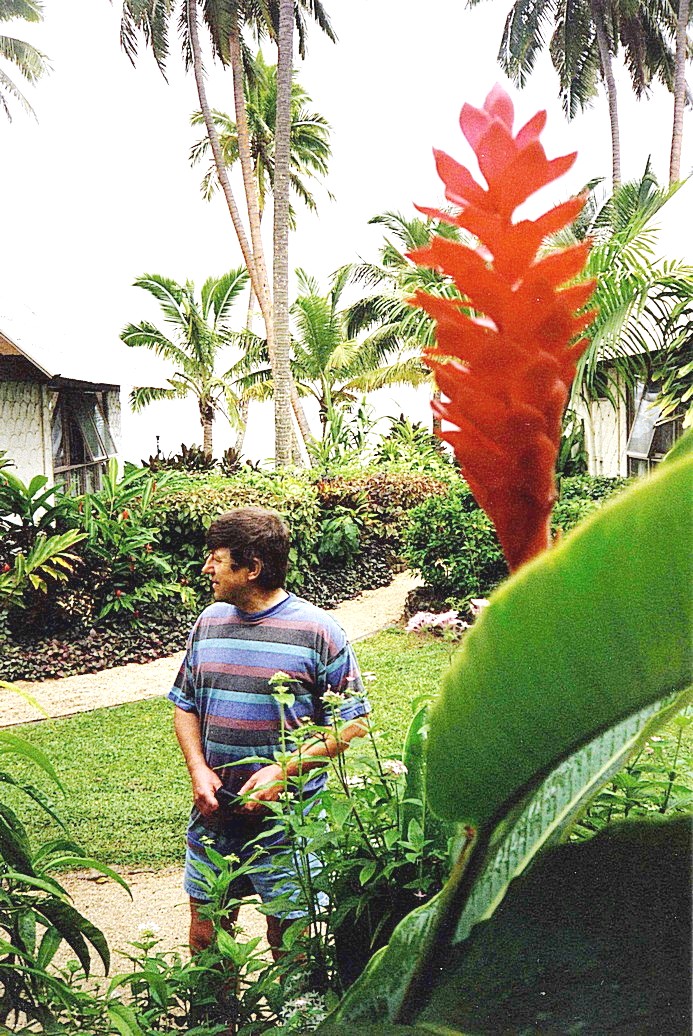
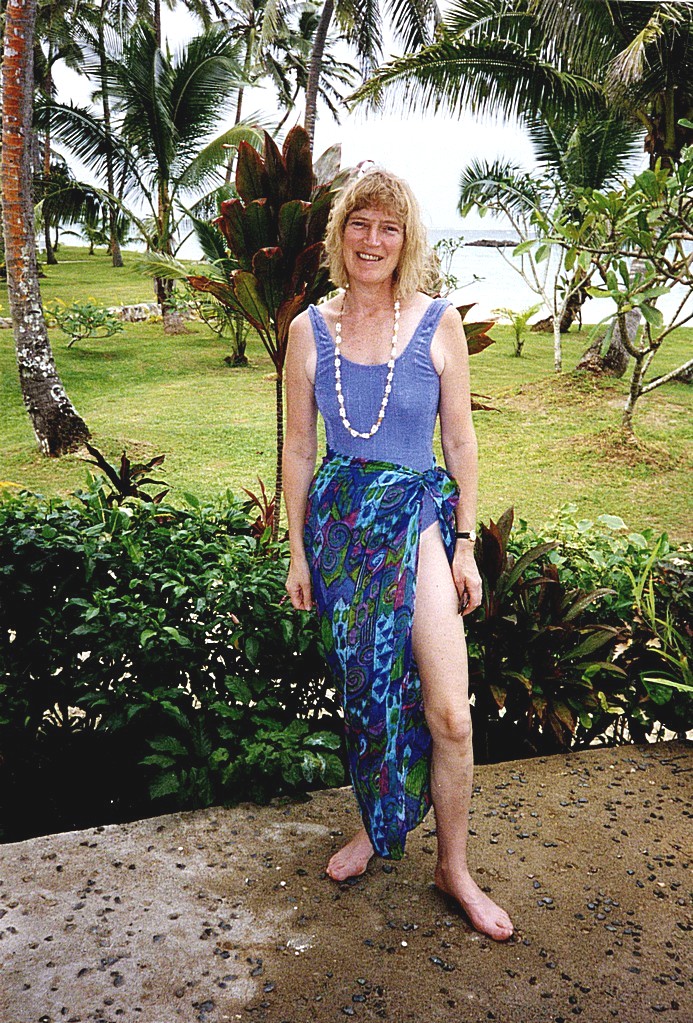
In the garden
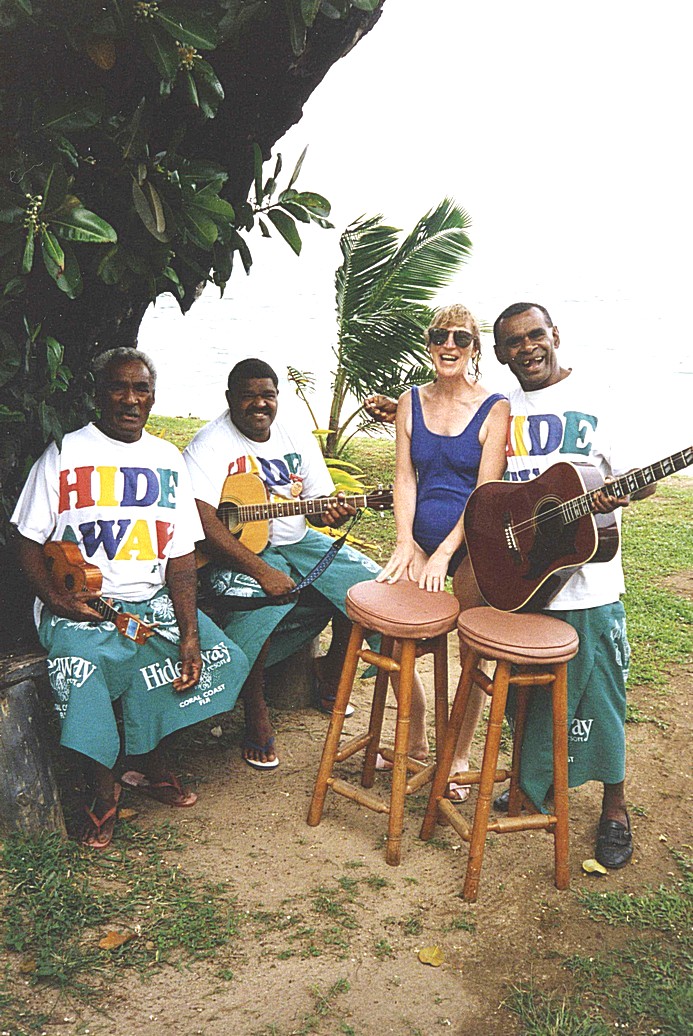
We then enjoyed toasted chicken sandwich (R) and tuna salad (A) with ice-cold water. We had watched and listened to a musical group of 3 Fijian gents outside by the pool. When we wanted to photograph them, they said "Bula" and invited me to stand with them to be photographed. They introduced themselves. One was "Big John". They then moved inside to play for the lunch guests. With flowers in their hair and "skirts" on they may have looked odd to Western eyes – but they have such warmth.
We have been persuaded by the "activities" lady to join the group going to the village at 1.30. We didn't really know what this entailed, except that we met the elder of the village and the schoolchildren. How glad we are that went! A largish group of us set off – perhaps 30. All were Australian except for us and another English family. We walked along the road a short distance – perhaps a quarter of a mile. We then went into the village – a series of huts in a grassy area. We had to wait a while for the retired teacher to appear. He led us into the church, where he talked to us for a while. It was a very simple church. He was a very sincere man. He said that Christianity had been in Fiji for 160 years. It was mostly Methodists and Catholic. He was grateful to the white man for bringing Christianity to Fiji.
He led us after a while to a house, where we all removed our shoes and walked in and sat cross legged in a large circle (we had previously been asked to remove hats and even sunglasses were pushed up on to heads; as respect for the villagers). We then engaged in the Kava ceremony. This is explained well in the text opposite, but did take place just as it is written. There was a great solemnity and sense of awe. One man continually rung out a "rag" in the liquid in the bowl. When eventually it was ready, it was handed to each in turn to drink – a half coconut full. There were 2 claps as the bowl was presented to each person, then 3 claps (I think the claps come from the sound of the coconut breaking from the palm and then dropping to the ground – it has just the same rhythm). Each of us drank the Kava (it tasted foul – rather like water from the greens) and while this was going on each person also had to introduce himself (Adrian was the first).
We have been persuaded by the "activities" lady to join the group going to the village at 1.30. We didn't really know what this entailed, except that we met the elder of the village and the schoolchildren. How glad we are that went! A largish group of us set off – perhaps 30. All were Australian except for us and another English family. We walked along the road a short distance – perhaps a quarter of a mile. We then went into the village – a series of huts in a grassy area. We had to wait a while for the retired teacher to appear. He led us into the church, where he talked to us for a while. It was a very simple church. He was a very sincere man. He said that Christianity had been in Fiji for 160 years. It was mostly Methodists and Catholic. He was grateful to the white man for bringing Christianity to Fiji.
He led us after a while to a house, where we all removed our shoes and walked in and sat cross legged in a large circle (we had previously been asked to remove hats and even sunglasses were pushed up on to heads; as respect for the villagers). We then engaged in the Kava ceremony. This is explained well in the text opposite, but did take place just as it is written. There was a great solemnity and sense of awe. One man continually rung out a "rag" in the liquid in the bowl. When eventually it was ready, it was handed to each in turn to drink – a half coconut full. There were 2 claps as the bowl was presented to each person, then 3 claps (I think the claps come from the sound of the coconut breaking from the palm and then dropping to the ground – it has just the same rhythm). Each of us drank the Kava (it tasted foul – rather like water from the greens) and while this was going on each person also had to introduce himself (Adrian was the first).
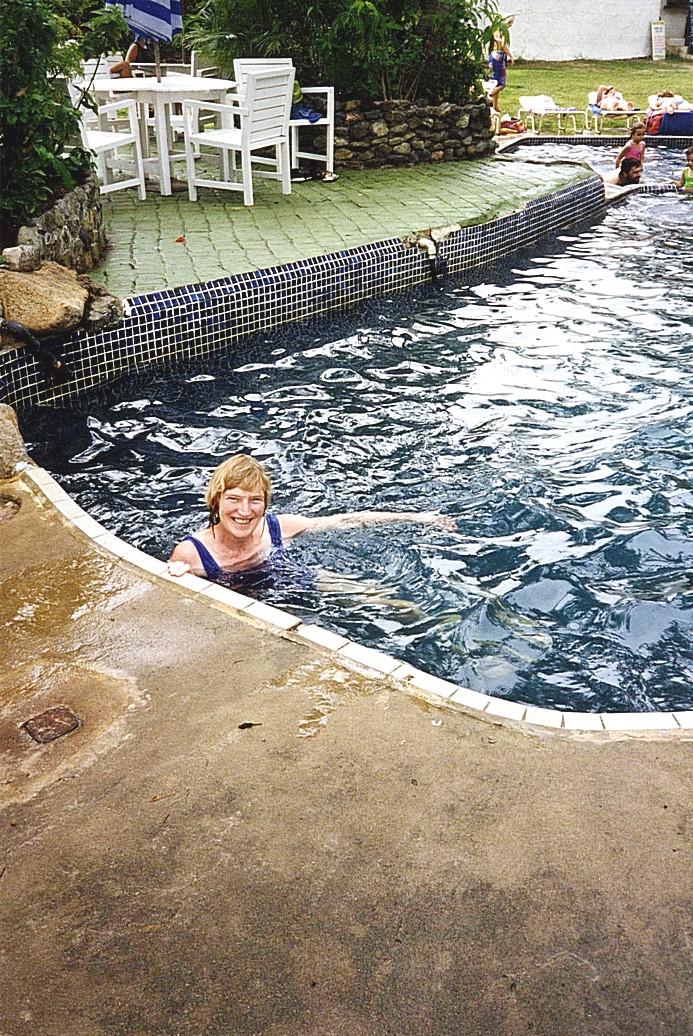
Rosie in the pool
Rosie with the band
A huge sense of camaraderie prevailed. We then left for the school – a muddy walk to another area of the village. Here, all the school children – aged 6 to 12 years, were assembled in one classroom and we sat on benches round the outside while they sang to us – all together first, then each class at a time. Some of the children were dressed up with "suka – suka" around their necks – the lovely necklaces of flowers and leaves, which many gave afterwards to some of the English children. The other children wore school uniform – white blouses and grey shorts/skirts, but it was significant that many of the boys wore "skirts". The children were a mixture of Fijian and Indian – the population of Fiji is almost 50/50, with a few others, mostly Europeans. It was interesting to see the children – some shy, some outgoing – just like children everywhere.
The "concert" finished about 3.00 pm, when it was time for the children to go home. Some mothers were waiting with younger children. Other children were "bussed" to neighbouring villages – just like anywhere else! We were able to speak to some of the children and teachers. The teacher I spoke to was Indian, but she said that all her class were Fijian, but she only spoke English.
The "concert" finished about 3.00 pm, when it was time for the children to go home. Some mothers were waiting with younger children. Other children were "bussed" to neighbouring villages – just like anywhere else! We were able to speak to some of the children and teachers. The teacher I spoke to was Indian, but she said that all her class were Fijian, but she only spoke English.
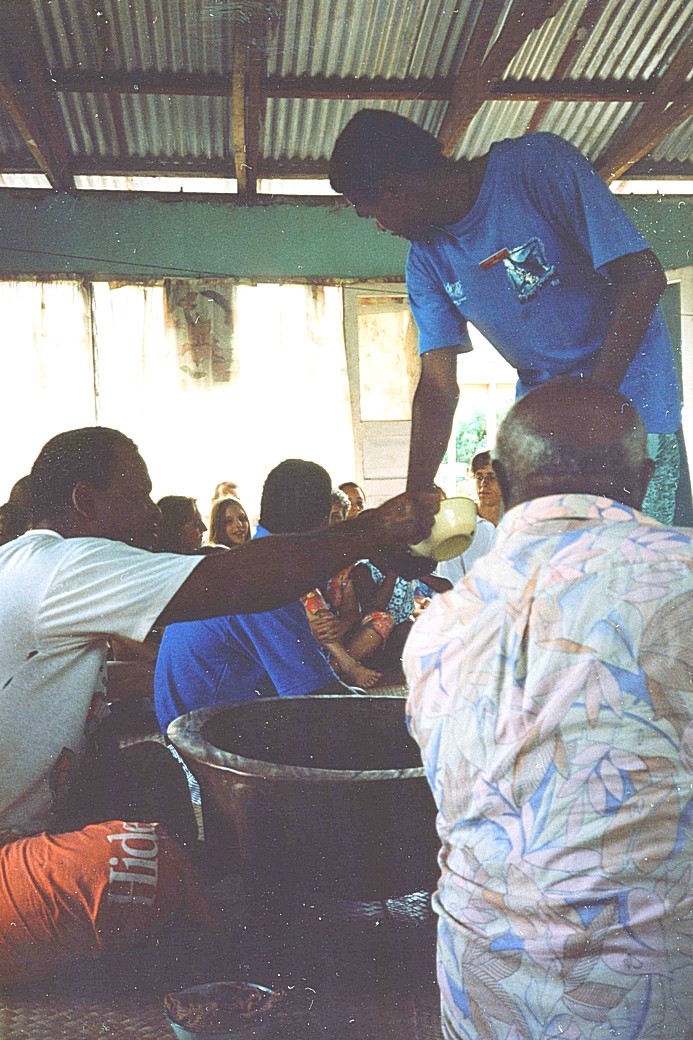
Cava ceremony
We were so lucky to have this opportunity – apparently it is only the 3rd time they have done it – and it was just the one day we were here. We all trooped back to "Hideaway" – on the way back along the road we met and elderly Fijian gentleman who stopped to speak – again such a genuine man. He explained about the flower garlands and how much it means to give one to someone. He spoke with such love and sincerity – these people really are something special and we in the Western world should learn from them. As a race they are quietly spoken and laid back gentle and loving. And they smile and welcome everyone.
By now we had met up with the other English people – a couple Mike and Dawn – late 30s (?) and their 3 children, Nicky (13), Russell (12) and Stephen (8). They have spent 5 months in Adelaide, where his sister lives. The children went to school there. They were making a "round the world" trip, by now taking a about 6 weeks travelling home. She was more outgoing than he, but all very pleasant. We found that their chalet was two along from us and spent a couple of hours chatting to them and drinking their beer and tea.
By now we had met up with the other English people – a couple Mike and Dawn – late 30s (?) and their 3 children, Nicky (13), Russell (12) and Stephen (8). They have spent 5 months in Adelaide, where his sister lives. The children went to school there. They were making a "round the world" trip, by now taking a about 6 weeks travelling home. She was more outgoing than he, but all very pleasant. We found that their chalet was two along from us and spent a couple of hours chatting to them and drinking their beer and tea.


Pictures around the school
We left them to walk out at low tide along the coral – there is so much here! Plenty to see out of the water, but not the magic of under the water! We headed for the bar, where we each had a long Fijian drink, mine containing Malibu, then returned soon afterwards for our evening meal. Adrian had "snapper" and I had "Mexican chicken". The food was not too brilliant, but we had a good bottle of New Zealand Chardonnay – the Fijian lady took great interest and trouble in this and the service is impeccable.
We were entertained by more Fijian music, but then by a large group of Fijian's – ladies and gents – the whole village it seemed. It was great fun and atmospheric.
We were entertained by more Fijian music, but then by a large group of Fijian's – ladies and gents – the whole village it seemed. It was great fun and atmospheric.

Mike, Russell, Nicky, Dawn & Stephen at the Hideaway Hotel
I got Adrian to go back for the video camera, but then they changed the music to popular audience participation conga type music – more like a holiday camp! They sang a couple of their songs at the end – they all laughed and joked such a lot – then we returned to the original group of 3 men, who only stopped when the "ugh" disco music started up.
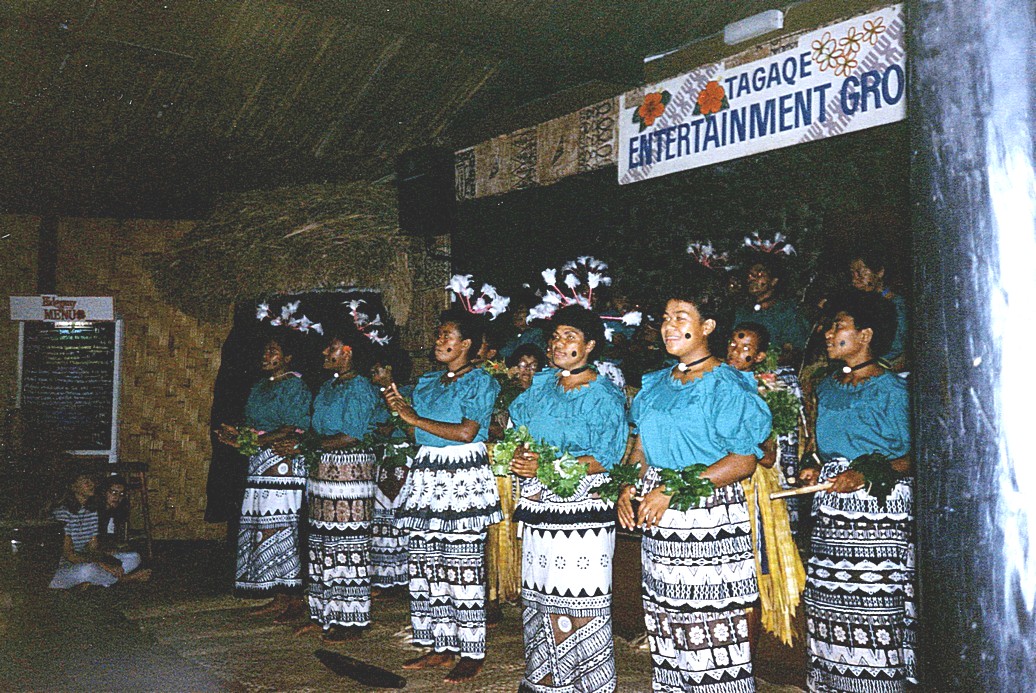
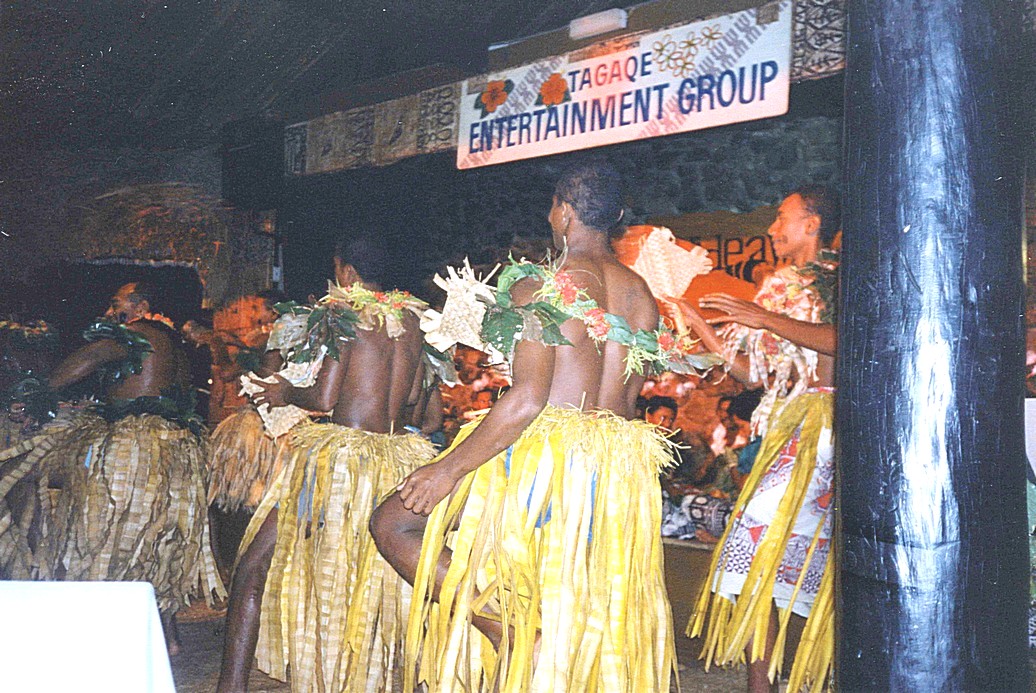
Fijian ladies singing and men dancing
Near disaster afterwards, when we couldn't find the newly finished video film (with all the school and dancing on) – all okay – Adrian had left it on the table in the restaurant and the staff have picked it up – not knowing what it was! Midnight and bed!

The 'Local' group back again
Saturday 22nd April – Sunday 23rd April
We awoke early – blue skies and such a magical view from our windows. Adrian went off to try to video some coral and I took one two photos. We had asked if they had an underwater disposable camera. "Sorry – none left"! Nothing worries these people!
We enjoyed breakfast in our sumptuous surroundings – I again enjoyed a plate of exotic fruits
We awoke early – blue skies and such a magical view from our windows. Adrian went off to try to video some coral and I took one two photos. We had asked if they had an underwater disposable camera. "Sorry – none left"! Nothing worries these people!
We enjoyed breakfast in our sumptuous surroundings – I again enjoyed a plate of exotic fruits
. We then came back to pack up. We were due out of our room at 11.00 am, but at 10.15 booked masks and snorkels again and once more enthralled ourselves in the magic world of the coral and the fish. Words cannot conjure up the joys we experienced – I just hope our memories will keep the treasures there – near the shore, I saw a shoal of about 100 huge fish.
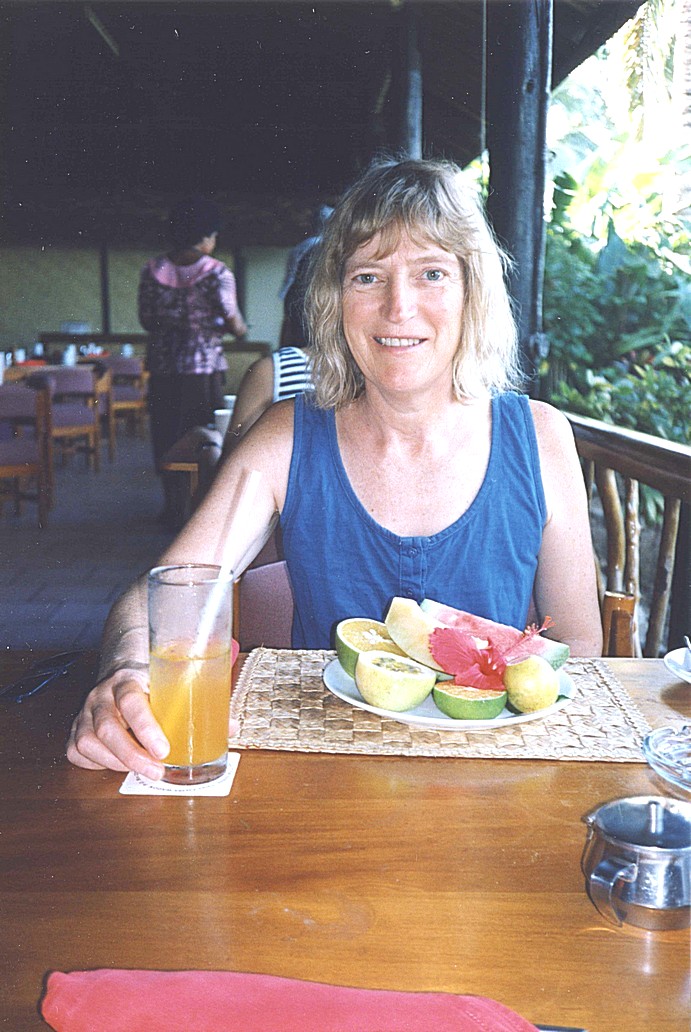
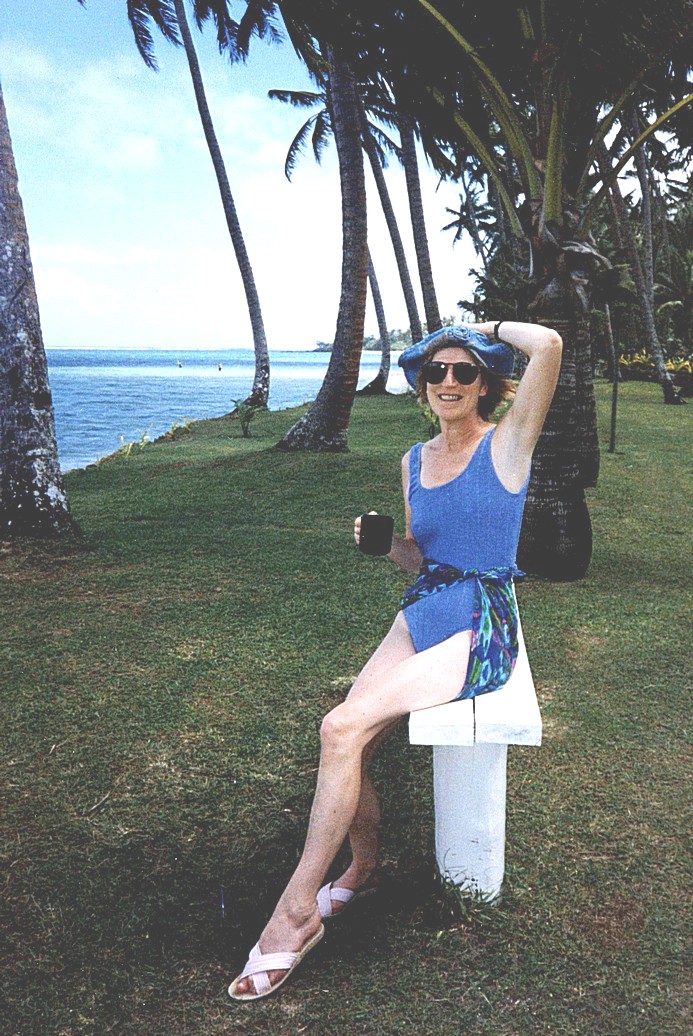
Rosie having breakfast and sitting outside our chalet
Luckily our room hadn't been made up when we returned, so we were able to shower and then enjoyed a cup of tea sitting under the coconut palms in front of the chalet, trying to absorb the beauteous surroundings to treasure.
We had an excellent lunch – I had stir fry chicken and rice – and ate every bit – and delicious iced water. We had stored our bags and now left our one remaining one with the activities lady while we had a walk along the other end of the beach, looking at the myriad pieces of coral, a few of which we picked up. We had hoped to get past the far rocks, as we had been told there was a deeper "lagoon" there, but this wasn't possible with the tide as it was. However I managed a quick "skinny dip" in the deeper water before the rocks.
We had an excellent lunch – I had stir fry chicken and rice – and ate every bit – and delicious iced water. We had stored our bags and now left our one remaining one with the activities lady while we had a walk along the other end of the beach, looking at the myriad pieces of coral, a few of which we picked up. We had hoped to get past the far rocks, as we had been told there was a deeper "lagoon" there, but this wasn't possible with the tide as it was. However I managed a quick "skinny dip" in the deeper water before the rocks.


Coral never looks as good out of the water
We returned along the beach, had a quick swim in the pool, said goodbye to our friends and in good time for about 4 o'clock pick up, when "surprise, surprise" at 3.45 the coach arrived for us (obviously returning from a day trip, as apart from us there were just 2 people and the two "guides" from the trip, who were dropped off just before Nadi).
We were glad that our return to the airport was in the light as it gave us a chance to see the country. For quite a way we followed along the "Coral Coast", with the reef all the way along. Then it was through green hilly country. We passed a few villages, where everyone waves, one town with its wide River and one hotel!
We saw lots of animals – horses and cattle, people riding donkeys, one man ploughing with two cattle, almost no cars to we reached Nadi.
The airport itself was quite up to date (it was being extended). It was just beginning to get dark, but still very warm. We had rather basic egg/cheese toasted sandwich in the airport cafe ("Sorry, no chicken sandwich, it gone")!, while our Air New Zealand plane and an Air Pacific plane landed close to us, but just outside the building!
Then we were on the plane heading for Honolulu – the never ending journey! We had to while away an hour to had Honolulu – not an enjoyable experience sitting in the transit lounge. The temperature outside was 24°C apparently. In the air-conditioned lounge it felt cold and I would like to have slept. Nothing to do but sit! No free drinks magazines or anything – a bit like being in hospital or prison – all in together and told not to go anywhere.
We continued to Los Angeles. Honolulu had looked very busy in the dark, from their. We reached Los Angeles in the light, with clear blue skies and again, apparently, 24° C. Again we saw the transit lounge for an hour also, but at least there were free drinks here, and luckily I had nipped into the loo just as we were leaving plane – the queue in Los Angeles was enormous! We had passed over several barren islands off the coast of Los Angeles and slowly circled around Los Angeles for a long descent – it gave us time to see the enormity of the place, the hills around and snow covered mountains in the distance. Planes were coming and going with great rapidity.
We tried to telephone home from the transit lounge, but gave up after several attempts of trying to decode their system.
We now boarded a 747 for the long final leg – a long taxi out and wait for take off – disappointment when we had middle seats and therefore couldn't see anything of the Grand Canyon when we passed. We seemed out of luck on this flight – the films shown were not what we wanted to see and our dinner was served last, so no choice, but we do seem to have been eating meals for the last 24 hours. We dozed a bit and towards morning watched some interesting wildlife video on White Island amongst other things and the same Mr Bean as on the onward journey to Nadi. Also a short bit on Fiji "these gracious and generous people", it said.
We arrived at Heathrow at 9.40 am, Sunday. A trouble-free ride on the Rail-air bus to Reading after phoning Tom. He collected us and we got home at about midday to an England coming alive with spring. The fresh green of the trees and the bluebells and other spring flowers were a compensation for being home from our wonderful holiday.
We were glad that our return to the airport was in the light as it gave us a chance to see the country. For quite a way we followed along the "Coral Coast", with the reef all the way along. Then it was through green hilly country. We passed a few villages, where everyone waves, one town with its wide River and one hotel!
We saw lots of animals – horses and cattle, people riding donkeys, one man ploughing with two cattle, almost no cars to we reached Nadi.
The airport itself was quite up to date (it was being extended). It was just beginning to get dark, but still very warm. We had rather basic egg/cheese toasted sandwich in the airport cafe ("Sorry, no chicken sandwich, it gone")!, while our Air New Zealand plane and an Air Pacific plane landed close to us, but just outside the building!
Then we were on the plane heading for Honolulu – the never ending journey! We had to while away an hour to had Honolulu – not an enjoyable experience sitting in the transit lounge. The temperature outside was 24°C apparently. In the air-conditioned lounge it felt cold and I would like to have slept. Nothing to do but sit! No free drinks magazines or anything – a bit like being in hospital or prison – all in together and told not to go anywhere.
We continued to Los Angeles. Honolulu had looked very busy in the dark, from their. We reached Los Angeles in the light, with clear blue skies and again, apparently, 24° C. Again we saw the transit lounge for an hour also, but at least there were free drinks here, and luckily I had nipped into the loo just as we were leaving plane – the queue in Los Angeles was enormous! We had passed over several barren islands off the coast of Los Angeles and slowly circled around Los Angeles for a long descent – it gave us time to see the enormity of the place, the hills around and snow covered mountains in the distance. Planes were coming and going with great rapidity.
We tried to telephone home from the transit lounge, but gave up after several attempts of trying to decode their system.
We now boarded a 747 for the long final leg – a long taxi out and wait for take off – disappointment when we had middle seats and therefore couldn't see anything of the Grand Canyon when we passed. We seemed out of luck on this flight – the films shown were not what we wanted to see and our dinner was served last, so no choice, but we do seem to have been eating meals for the last 24 hours. We dozed a bit and towards morning watched some interesting wildlife video on White Island amongst other things and the same Mr Bean as on the onward journey to Nadi. Also a short bit on Fiji "these gracious and generous people", it said.
We arrived at Heathrow at 9.40 am, Sunday. A trouble-free ride on the Rail-air bus to Reading after phoning Tom. He collected us and we got home at about midday to an England coming alive with spring. The fresh green of the trees and the bluebells and other spring flowers were a compensation for being home from our wonderful holiday.
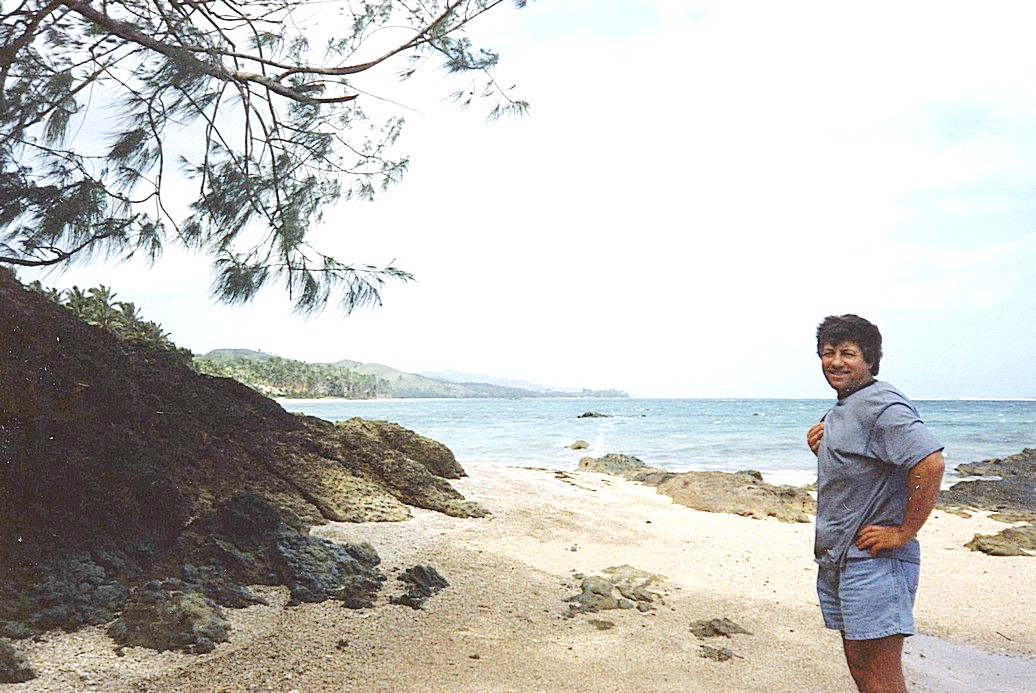
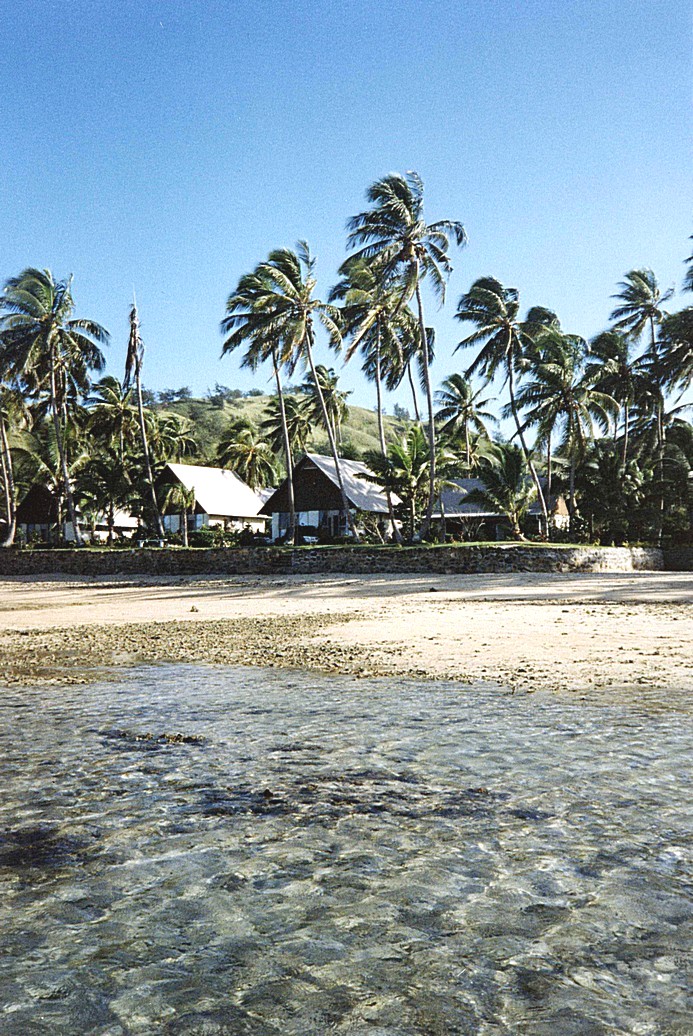
Adrian looking back to the Hideaway Hotel from along the beach
Our chalet from the beach
So sadly after our visit to Fiji during which we thought everyone was so happy, there was another civil war in 2000
New Zealand – first impressions – differences – similarities
Tropical shrubs in bright colours – red, yellow, mauve. Bottlebrush trees.
Bad road signs – other signs e.g. rest area – not specific.
Lot of traffic around Auckland. Bad driving – pulling out.
All low cabin type housing.
"Upside down" trees (Norfolk Pines). Agapanthus. Morning Glory. Datura.
Aloe everywhere and Pampas grass.
"Unmade" roads – sometimes just short stretches.
Lack of supermarkets. Lots of fruit/veg shops.
People friendly.
Lots of birds of prey.
Lots of old cars (60's).
Signs on road written Way Give.
Possums.
Children barefooted.
No exit for No through road.
Lovely children's playgrounds.
Chocolate and coffee expensive.
Lots of flower nurseries.
Situations with Maoris – not integrated.
Radio similar.
Dislike of Asians – particularly Japanese.
Low level shopping precincts like Australia.
'Superette' for small supermarket.
Zebra crossings still.
"The main" for area.
"Bluff" for hill.
"Judder bar is" for ramps.
Single lane bridges.
Toll free (freephone).
"Creamed" (set) honey.
"Slips" for slip of earth, landslide.
Line Up – queue.
Very few crash barriers.
Walking tracks, but no footpaths (called walkways).
Tropical shrubs in bright colours – red, yellow, mauve. Bottlebrush trees.
Bad road signs – other signs e.g. rest area – not specific.
Lot of traffic around Auckland. Bad driving – pulling out.
All low cabin type housing.
"Upside down" trees (Norfolk Pines). Agapanthus. Morning Glory. Datura.
Aloe everywhere and Pampas grass.
"Unmade" roads – sometimes just short stretches.
Lack of supermarkets. Lots of fruit/veg shops.
People friendly.
Lots of birds of prey.
Lots of old cars (60's).
Signs on road written Way Give.
Possums.
Children barefooted.
No exit for No through road.
Lovely children's playgrounds.
Chocolate and coffee expensive.
Lots of flower nurseries.
Situations with Maoris – not integrated.
Radio similar.
Dislike of Asians – particularly Japanese.
Low level shopping precincts like Australia.
'Superette' for small supermarket.
Zebra crossings still.
"The main" for area.
"Bluff" for hill.
"Judder bar is" for ramps.
Single lane bridges.
Toll free (freephone).
"Creamed" (set) honey.
"Slips" for slip of earth, landslide.
Line Up – queue.
Very few crash barriers.
Walking tracks, but no footpaths (called walkways).